Brave has released benchmark results showing it outperforms Chrome, Edge, and Firefox in both speed and performance.
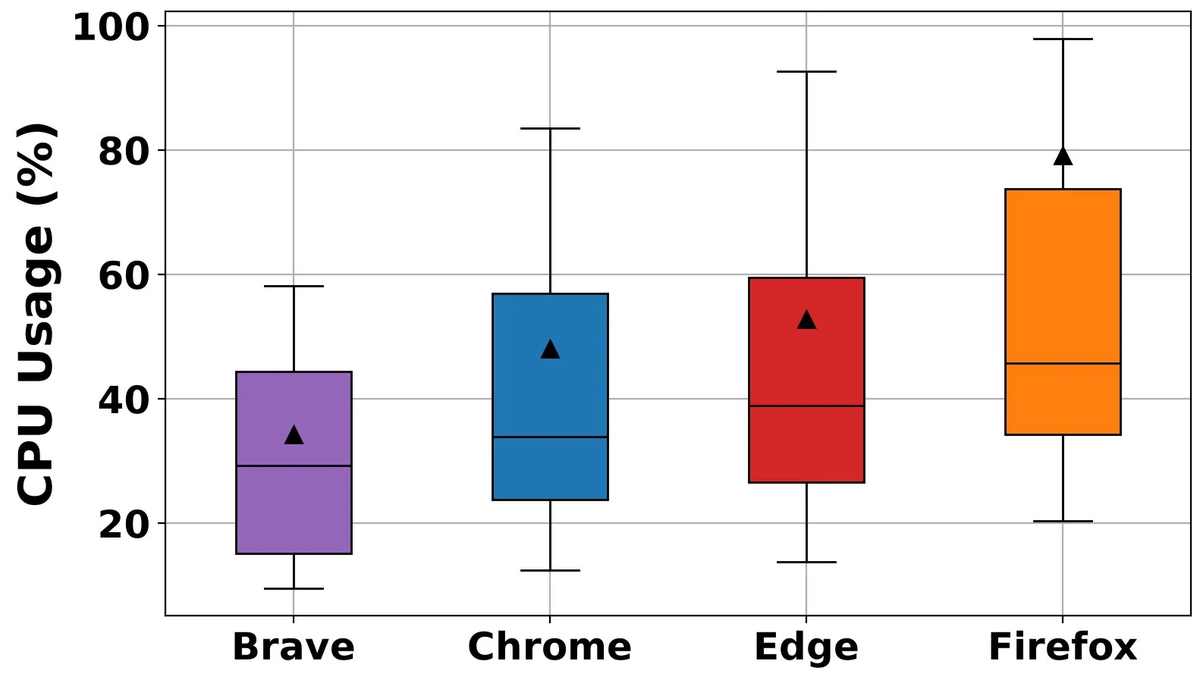
The web browser Brave has released benchmark comparison results against its widely used rivals, Chrome, Edge, and Firefox. According to the tests, Brave uses less CPU, energy, and memory than the other three browsers, and its page loading speed is 20% faster.
Brave for Desktop Outperforms Other Browsers in Speed and Performance | Brave
The hardware used for testing was an Apple Mac Mini with an Apple M2 processor and 8GB of memory, running macOS 26.5.1 (25F80). All tests were conducted in a 50Mbps dedicated line connection in London. The browsers used were the latest versions available at the time of testing: Brave 1.92.139 (Chrome 150.0.7871.114/Arm64), Chrome 150.0.7871.184 (Arm64), Edge 150.0.4078.83 (Arm64), and Firefox 146.0.1 (64-bit).
The Brave team performed 10 sets of loading 50 popular websites ranked by Brave Search statistics. The order in which the tests were performed was randomized to ensure that there was no advantage or disadvantage based on the execution order. Baseline user data was created for each browser with default settings, and before running the tests, the baseline was moved to a temporary folder that would not affect the results, so that caches and cookies would not influence the results. The browser was then launched from an isolated profile, and a 60-second wait was held before the start of measurement for background processes to settle down.
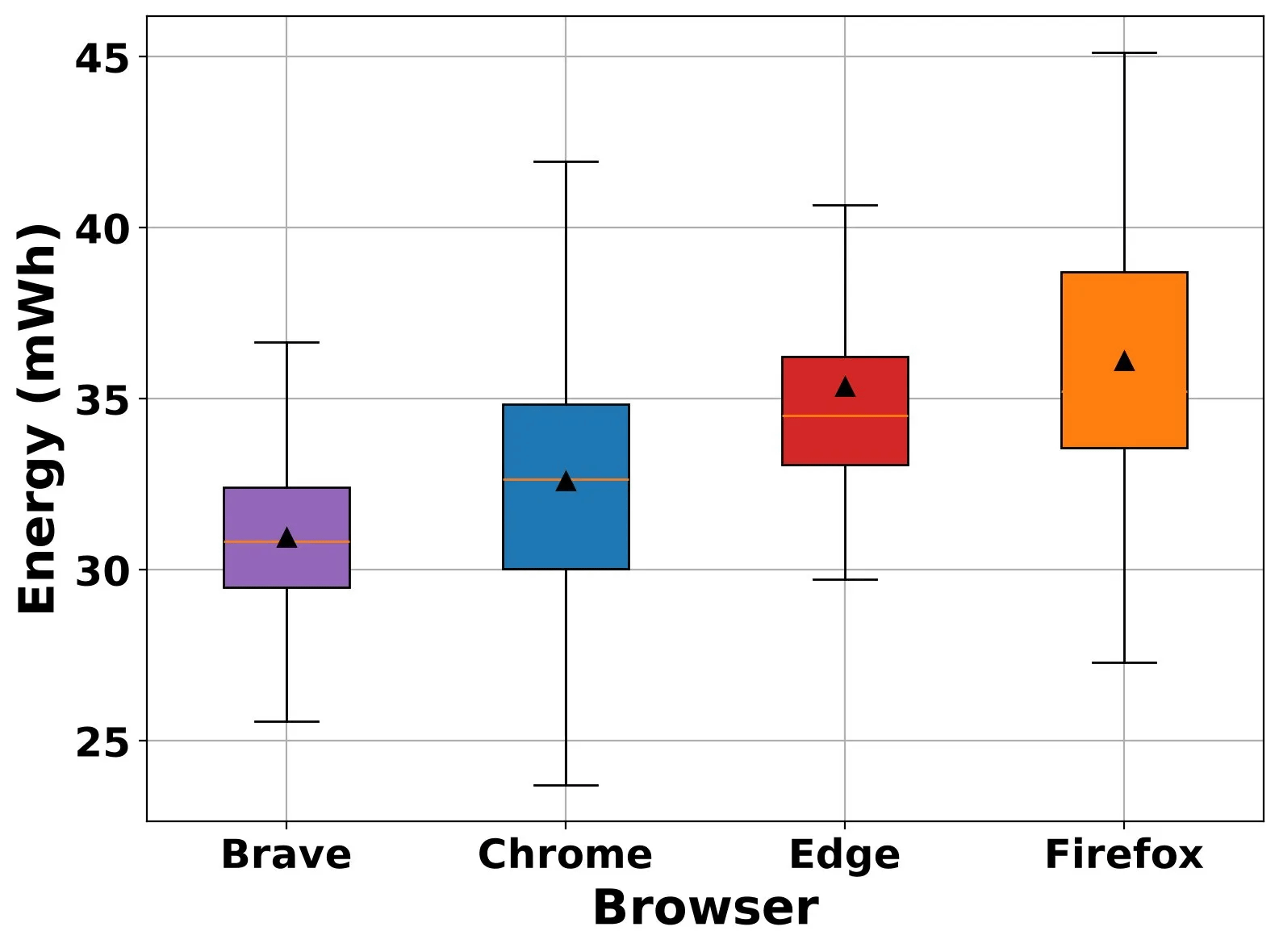
The graph below shows the total energy consumption (mWh) required to load and render web pages. Brave was the most energy-efficient web browser, with an average consumption of approximately 31.1 mWh. Furthermore, it showed a narrower distribution of energy consumption compared to other browsers, resulting in less variability in power distribution during page loading and stable energy behavior across different websites.
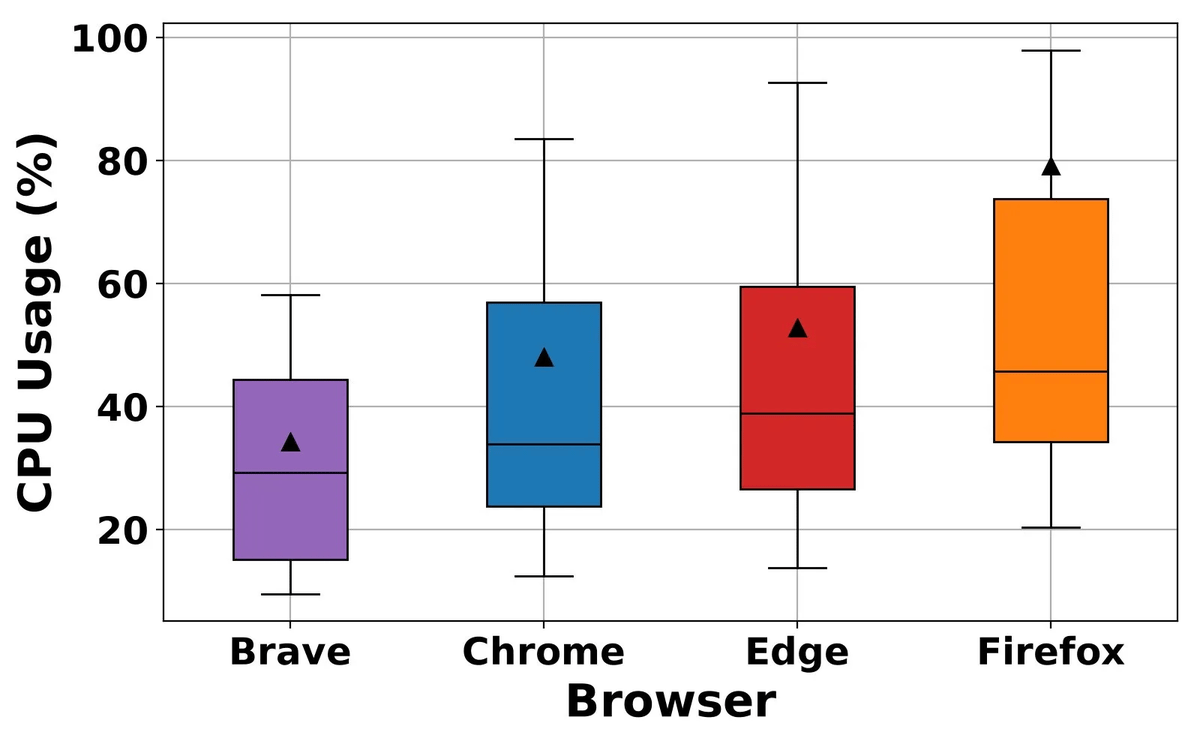
Brave also performed better than the other three browsers in terms of CPU usage, which indicates processor load during page loading and rendering, averaging around 33%. Firefox, in particular, had high CPU usage, sometimes reaching 100%. The reason Brave's CPU usage is lower than that of Chrome and Edge, which also use the Chromium engine, is likely due to the reduction in page load caused by its native ad blocking.
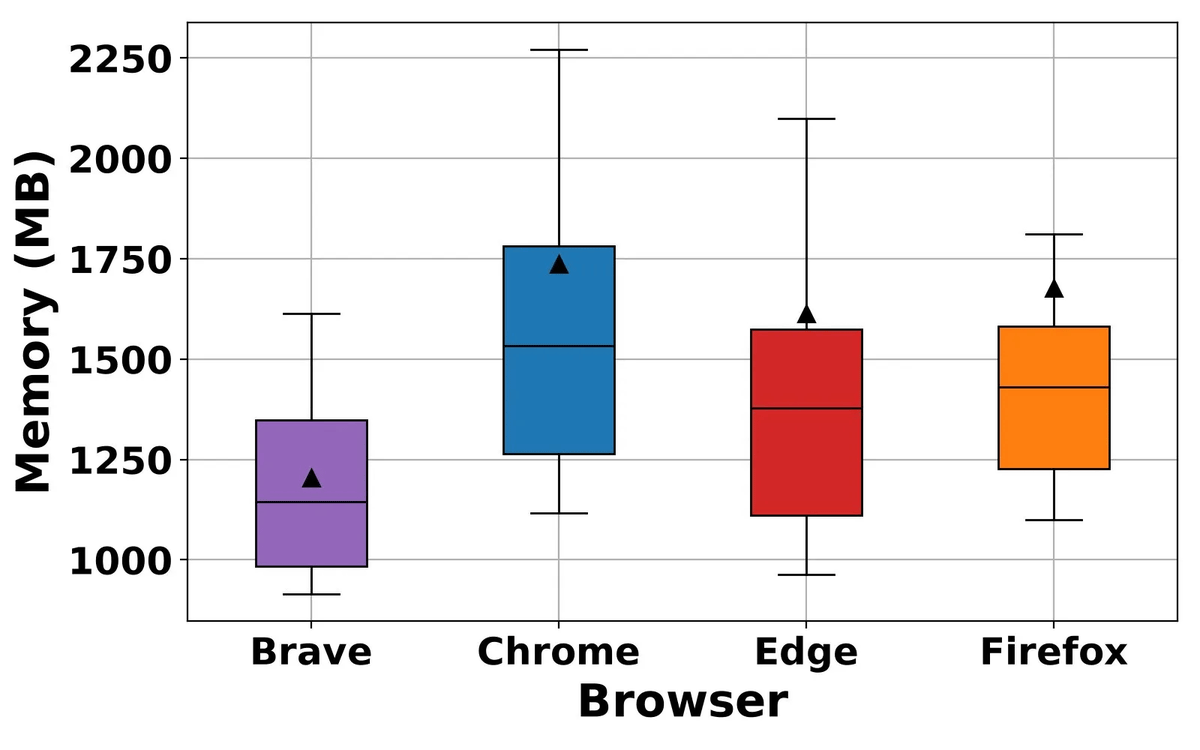
With an average memory usage of 1200MB, it is 26% to 31% more efficient than the other three browsers. This high efficiency is due to its architecture, which employs process isolation and cache management, reducing the number of resources that need to be held in memory simultaneously. Brave is working to further reduce the memory overhead of its native blockers, so it is expected that future versions will widen the gap with its rivals even further.
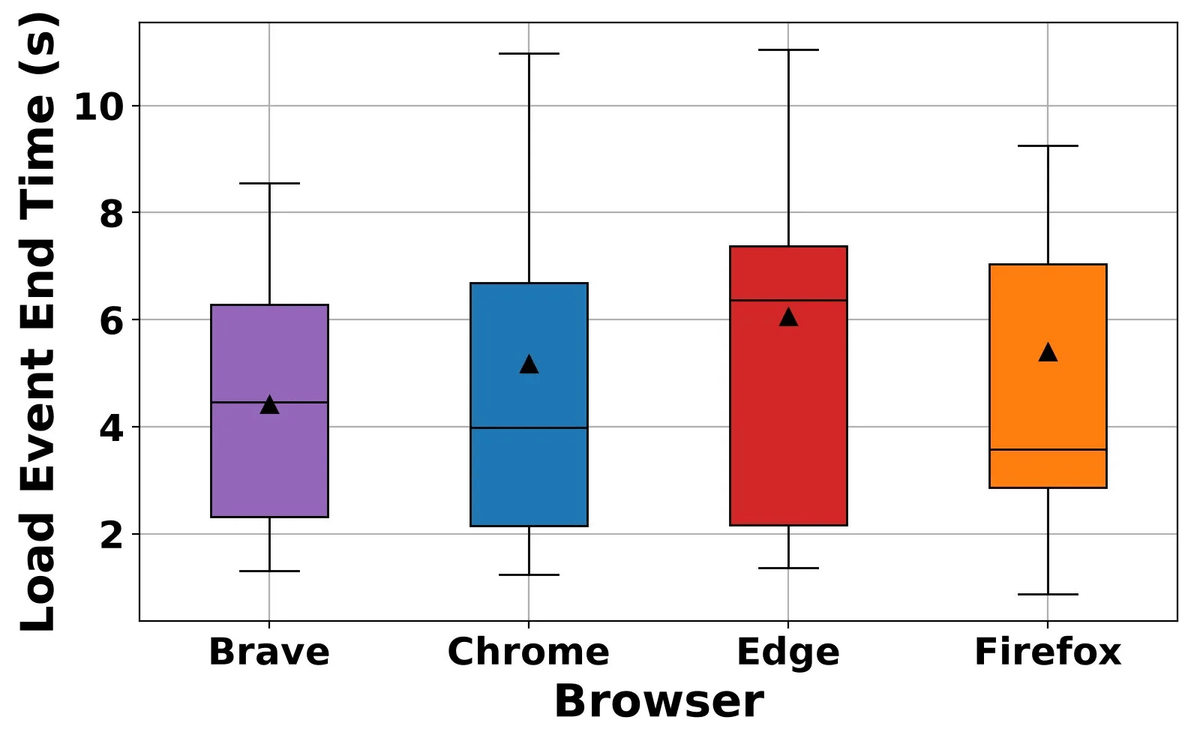
In terms of page loading speed, Brave averaged 4.4 seconds from the start of navigation to the completion of loading, which was faster than Chrome's average of 5.1 seconds, Edge's average of 6.0 seconds, and Firefox's average of 5.3 seconds.
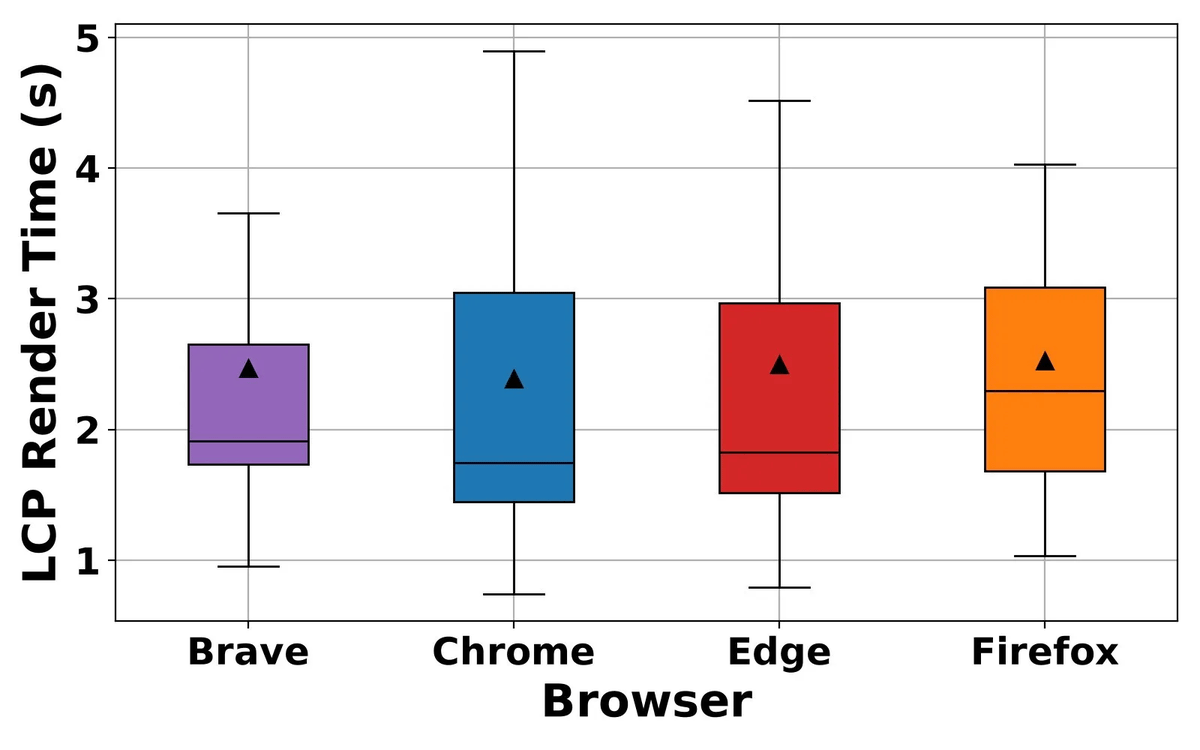
In terms of rendering speed for ' Maximum Content Rendering (LCP) ,' Brave averaged 2.4 seconds, putting it on par with Chrome, while Edge and Firefox were slightly slower at approximately 2.5 seconds.
The reason Safari and other WebKit-based web browsers are not included in this comparison is that Brave's mobile measurement system is Android-based, while Safari does not have an Android version, and although there are several projects for WebKit-based browsers for Android, they are not yet widespread.
Related Posts:







in Software, Posted by logc_nt