A SpaceX Falcon 9 rocket crashed on the lunar surface, creating a basketball court-sized crater.
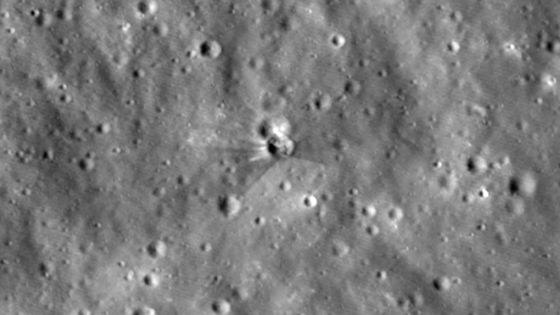
On August 5, 2026,
NASA's LRO Images Falcon 9 Crater on Moon, Learns New Details - NASA Science
https://science.nasa.gov/solar-system/moon/nasas-lro-images-falcon-9-crater-on-moon-learns-new-details/
SpaceX rocket leaves moon crater wider than NBA basketball court | Mashable
https://mashable.com/science/nasa-images-spacex-rocket-crash-moon
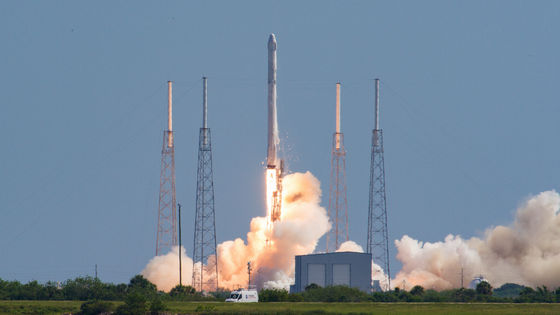
The object that crashed onto the lunar surface on August 5, 2026, was the upper stage of the Falcon 9 rocket used to launch the Blue Ghost lunar lander in January 2025.
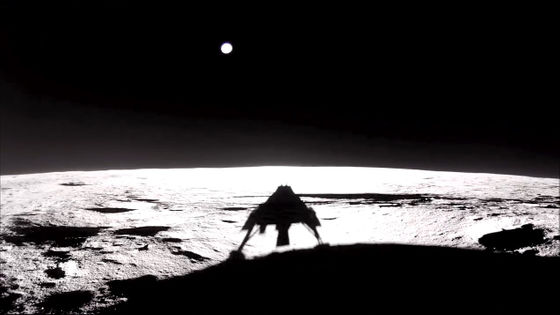
A video resembling a scene from a movie showing the private lunar lander 'Blue Ghost' landing on the moon has been released - GIGAZINE
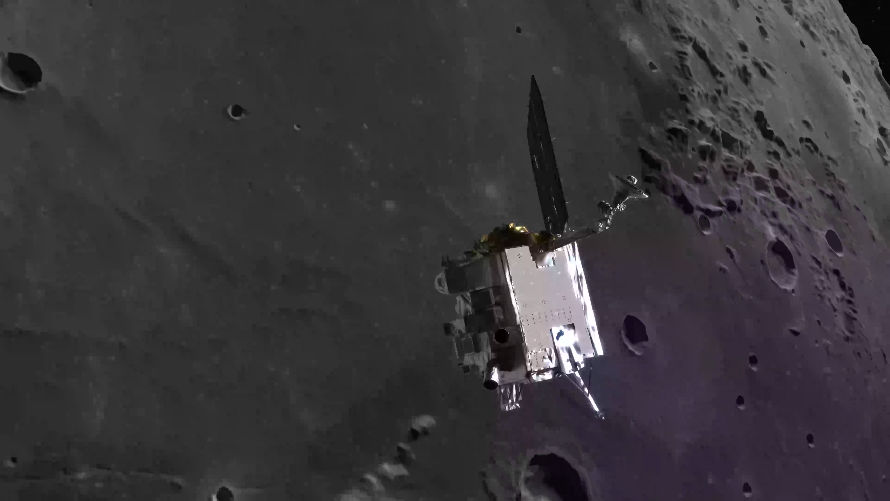
To photograph the crash, NASA engineers aimed the narrow-angle camera on the LRO at the Falcon 9 crash site and photographed the crater. The LRO travels at a speed of 1 mile (approximately 1.6 km) per second, so it orbits the moon from pole to pole every two hours. Also, because the moon rotates slowly, the probe had to wait until a specific location came into the frame in order to photograph it, which reportedly took six days.
In addition, the camera's shutter timing must be precise; a 10-second delay in shutter timing can shift the shooting location by 10 miles (approximately 16 km).
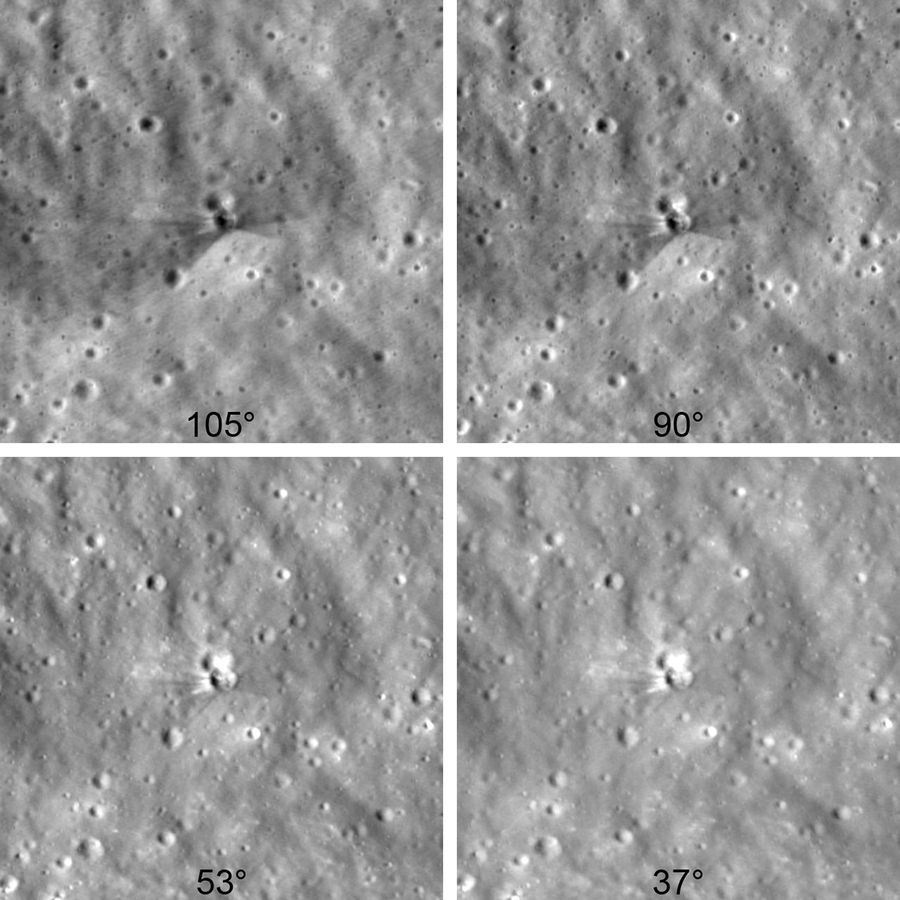
NASA scientists photographed the Falcon 9 crash site from various angles. As a result, they estimated the crater to be approximately 18 meters wide and less than 3 meters deep.
The image below shows the predicted impact site of the upper stage of Falcon 9, as predicted by engineers at NASA's Center for Near Earth Objects (CNEOS), as an elliptical region. Both ellipses are 2.1 miles (approximately 3.4 kilometers) long and 0.4 miles (approximately 640 meters) wide. Both predictions use the same booster trajectory calculations, but only the blue ellipse takes the lunar topography into account. The red and blue dots represent the predicted impact sites, while the light blue dot represents the actual impact site.
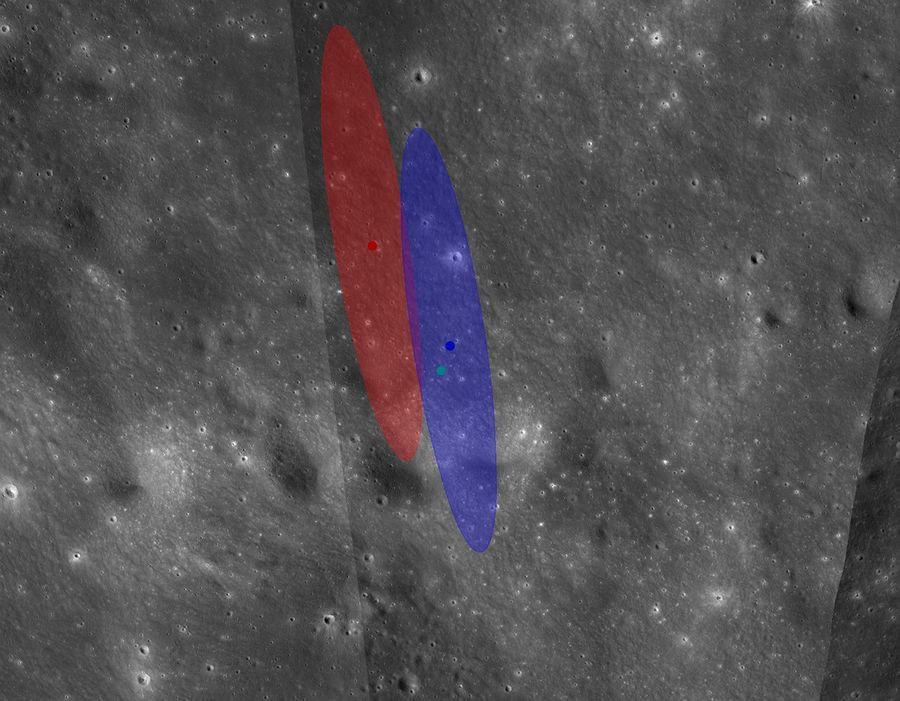
Identifying the impact site of the Falcon 9 required a global collaboration between experts and amateur astronomers. First, independent astronomers used publicly available data to determine the rocket's trajectory. Next, NASA's CNEOS tested and validated tools and techniques for impact prediction. CNEOS gradually refined the trajectory until the impact site was identified, and provided the results to the South Korean lunar probe Tanuri team. A few hours later, the Tanuri team used the LUTI high-resolution camera on board Tanuri to photograph the crater, confirming that the prediction was accurate to within approximately 0.6 miles (about 970 meters).
After capturing images of the crater, Tanuri transmitted coordinates to NASA's LRO team. This coordinate information helped improve the accuracy of subsequent imaging sequences.
Related Posts:



in Note, Posted by logu_ii