People who have experienced severe sunburn in the past may have a higher lifelong risk of skin cancer.

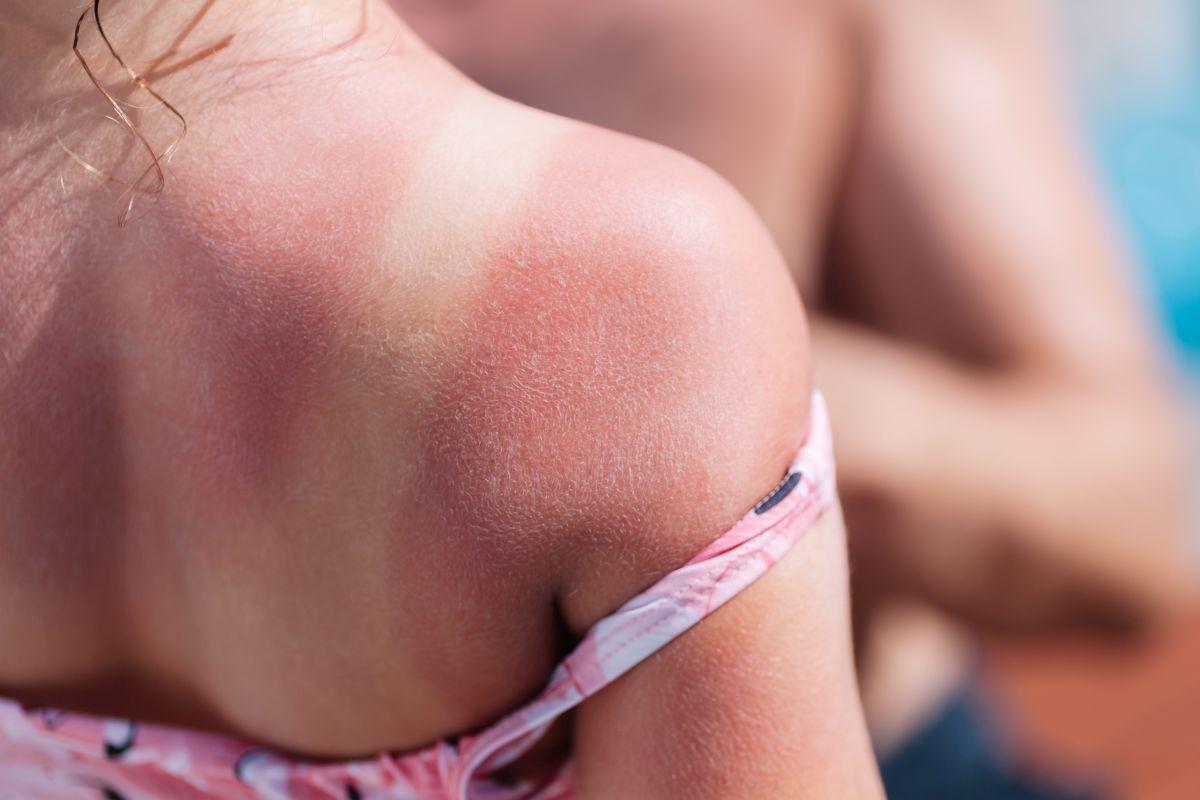
Many people likely remember running around outdoors during summer vacations as children, participating in club activities or playing, and getting sunburned every year. An analysis involving over 320,000 people revealed that those who have experienced severe sunburn in the past may have a higher lifelong risk of skin cancer.
Sunburn and Cutaneous Squamous Cell Carcinoma: A Meta-Analysis | Dermatology | JAMA Dermatology | JAMA Network
Can One Severe Sunburn Increase Your Cancer Risk? | University of Rochester Medicine
https://www.urmc.rochester.edu/news/publications/health-matters/can-one-severe-sunburn-increase-your-cancer-risk
Bad News: Just One Intense Sunburn Really Can Be 'Life-Changing' : ScienceAlert
https://www.sciencealert.com/bad-news-just-one-intense-sunburn-really-can-be-life-changing
It is widely known that exposure to ultraviolet rays increases the risk of skin cancer, and many people have started using sunscreen or carrying parasols as adults. However, sometimes people let their guard down and go to a barbecue or the beach, resulting in a severe sunburn. Also, some people may have had little concern about sunburn as children and got sunburned year after year without thinking about it.
A research team led by dermatologist Isaac Weber at the University of Texas MD Anderson Cancer Center investigated how the risk of developing cutaneous squamous cell carcinoma (cSCC) , one of the most common types of skin cancer, is associated with a history of severe sun exposure.
The research team conducted a meta-analysis using data from 17 studies involving a total of 321,473 subjects, collected from scientific databases. After adjusting for age, sex, skin color, and skin sensitivity as much as possible, they analyzed the association between various types of sun exposure history and the risk of developing squamous cell carcinoma of the skin.

Analysis revealed that individuals who experienced painful sunburns, blistering sunburns, or severe sunburns with moderate frequency during their lifetime had a 51% higher incidence of squamous cell carcinoma of the skin compared to those with no such history. Furthermore, those who experienced these types of sunburns frequently had a 69% higher incidence rate.
Having experienced such severe sunburn even once in a lifetime increased the risk of squamous cell carcinoma of the skin by 38%. Furthermore, it was found that people who frequently experienced similar severe sunburns during childhood had approximately three times the risk of squamous cell carcinoma of the skin.
Once you get a sunburn, even if the surface skin peels off or your skin color returns to normal, the damage to your DNA from ultraviolet rays remains. Adrian Victor of the Wilmot Cancer Institute at the University of Rochester, who was not involved in this study, says, 'Sometimes mistakes happen when the body repairs that damage. These mutations can accumulate over time and potentially lead to the development of skin cancer.'
Furthermore, Zinnia El-Fegary, head of pediatric dermatology at the University of Rochester, commented, 'Children are more susceptible to these effects due to several risk factors, including the biological characteristics of pigment-producing skin cells, their higher likelihood of sun exposure, and their failure to properly use sunscreen.'
ScienceAlert, a science media outlet, argues that this meta-analysis suggests that sunburns that cause visible skin damage should be avoided. They advise that to protect oneself from excessive sunburn, one should take precautions such as wearing appropriate clothing, applying sunscreen, and wearing a hat, or even simply avoiding the midday sun.
Related Posts:







in Free Member, Science, Posted by log1h_ik