The intestinal fungi of pests that damage tomatoes and strawberries may be able to decompose styrofoam.
The larvae of
Helicoverpa armigera (Lepidoptera, Noctuidae) as a reservoir of potential polystyrene-degrading fungi | BMC Microbiology | Springer Nature Link
https://link.springer.com/article/10.1186/s12866-026-05021-8
Gut Fungi From a Common Pest Can Chew Holes in Styrofoam : ScienceAlert
https://www.sciencealert.com/gut-fungi-from-a-common-pest-can-chew-holes-in-styrofoam
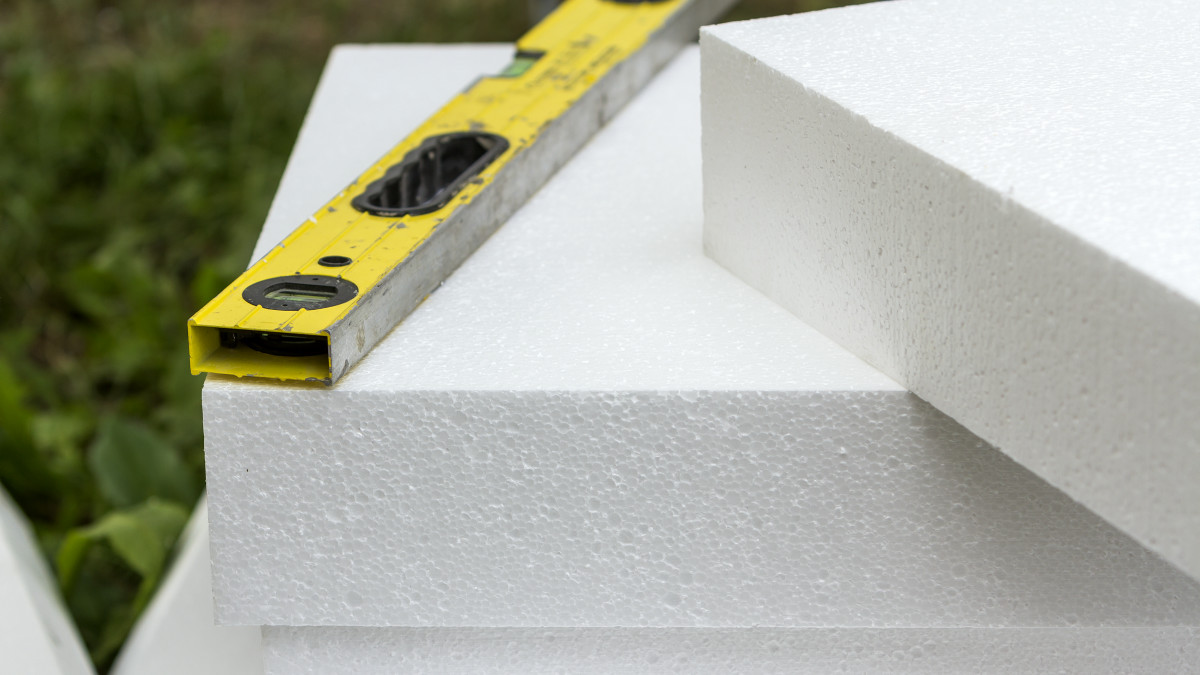
Expanded polystyrene (Styrofoam) is a type of plastic made by incorporating air bubbles into polystyrene , and is used in a variety of applications, such as packaging for electronic devices, coffee cups, and refrigerator insulation. Polystyrene production is increasing year by year and could reach approximately 62 million tons by 2034 , but as of the time of writing, no effective recycling method for polystyrene has been found, so most expanded polystyrene is disposed of in landfills.
Scientists are turning to insects and microorganisms to solve this problem, and have indeed discovered microorganisms that can break down plastic . However, it is not well understood what ultimately happens to plastic after it has been broken down by insects and microorganisms, or the mechanism by which they break down plastic.
Therefore, a research team at the Federal University of São Carlos in Brazil conducted an experiment focusing on the intestinal fungi of the tobacco budworm, a pest widely distributed around the world whose larvae are known to feed on styrofoam. It is known that the intestinal microbiota of tobacco budworm larvae changes depending on what they eat, so the research team thought, 'If we feed them styrofoam, will the fungi that decompose styrofoam increase?'
Clicking the image below will take you to a link where you can see the uncensored image of the tobacco budworm larva.

by Gyorgy Csoka, Hungary Forest Research Institute
In the experiment, tobacco budworm larvae were given one of three types of samples over a seven-day period: 'styrofoam only,' 'half styrofoam and half general sample,' or 'general sample only.' After seven days, the intestinal microorganisms of the larvae were isolated, and the types of fungi that proliferated in each group were examined.
The experiment revealed that larvae fed only styrofoam had significantly higher levels of fungi of
Next, the research team isolated and cultured one species of Aspergillus, one species of Talaromyces, and two species of Penicillium from the larval intestines. The following photos all show fungi isolated from the larvae; the top left is Aspergillus, the top right is Talaromyces, and the bottom row is Penicillium.
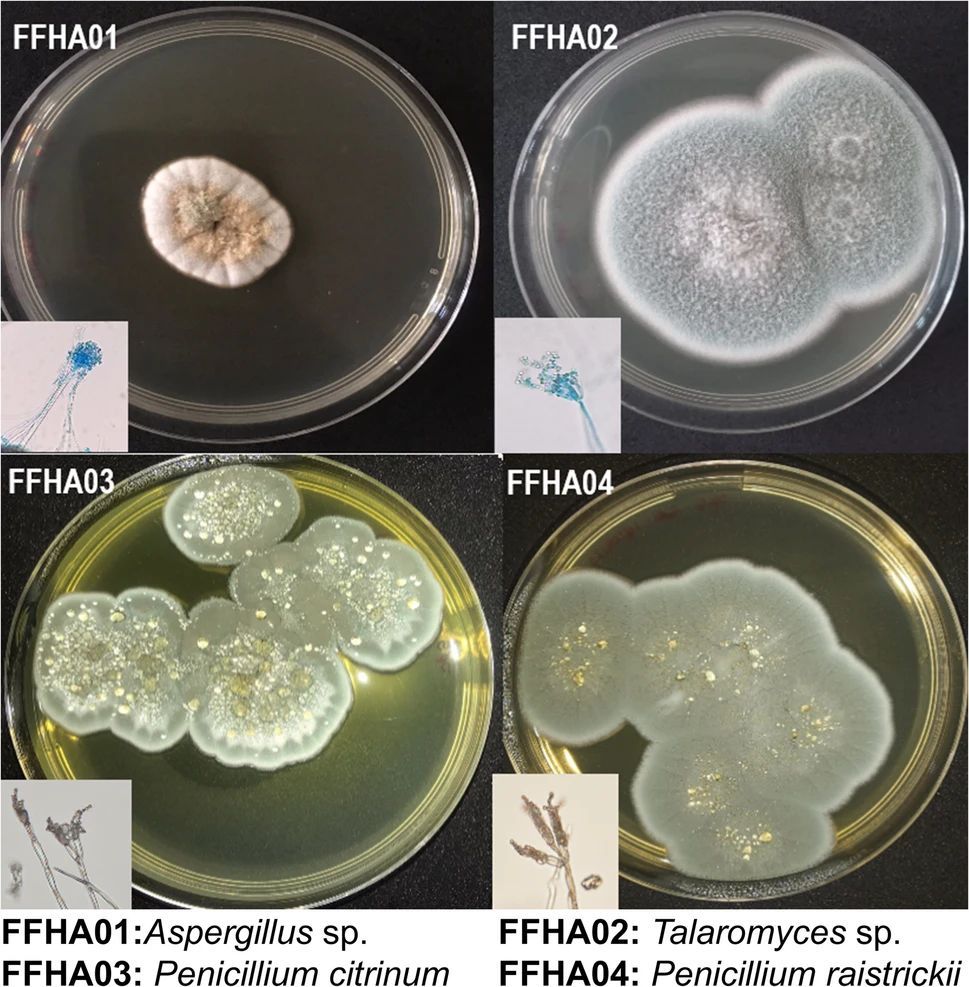
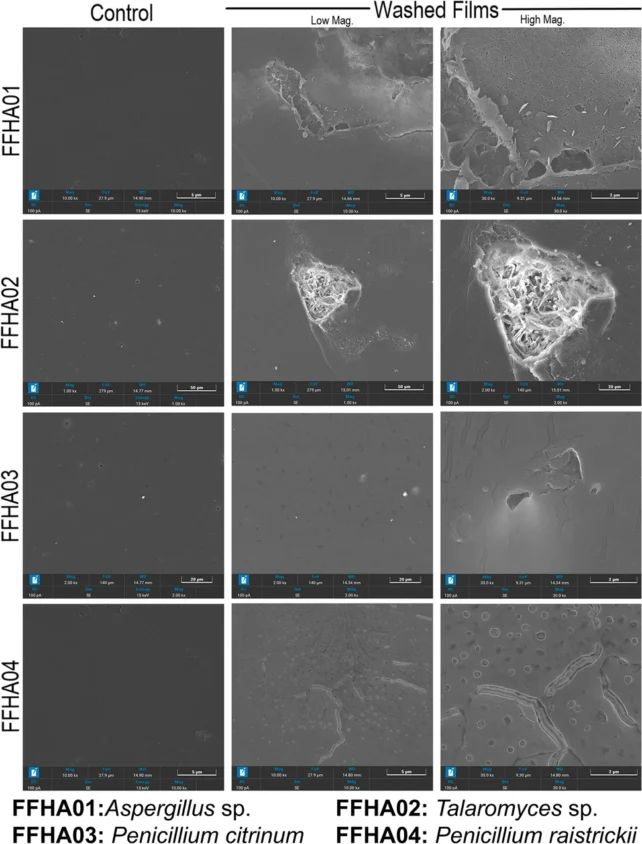
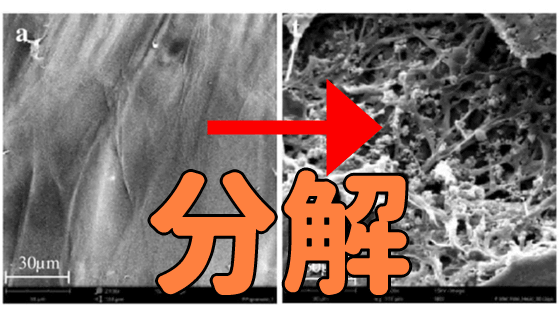
The research team cultured four types of fungi isolated from larvae on a smooth polystyrene film for 60 days. After that, to investigate how the fungi affected the polystyrene film, they washed away the fungi and observed the film with a scanning electron microscope.
The images below show, from left to right, polystyrene film without fungal culture; in the middle, polystyrene film after fungal culture (taken at low magnification); and on the right, polystyrene film after fungal culture (taken at high magnification). From top to bottom, they represent Aspergillus, Talaromyces, and two species of Penicillium. In particular, in the film cultured with Talaromyces, which had increased in number among larvae fed styrofoam, traces of fungal intrusion through holes were observed.
This experiment demonstrated that fungi residing in the intestines of tobacco budworm larvae act on polystyrene, but the specific chemical processes involved are not well understood. The next crucial step is to investigate whether these fungi actually digest the polystyrene or break it down into smaller fragments. The efficiency with which the fungi decompose polystyrene will also be an important factor in the large-scale deployment of such biotechnology.
ScienceAlert, a science media outlet, points out that while many microorganisms and insects have been shown to have the ability to decompose plastics, these have contributed little to solving the plastic problem. It suggests that isolating the enzymes used in the decomposition process, rather than using the microorganisms or insects as they are, may be more suitable for industrial-scale applications.
Related Posts:



in Free Member, Science, Creature, Posted by log1h_ik