The earliest Viking silver coins may have been made by mixing silver that came from the Islamic world.
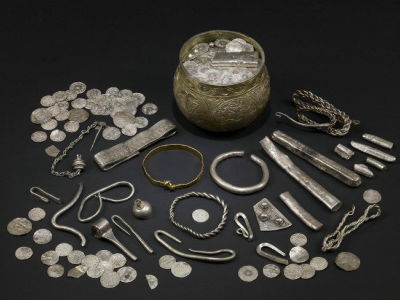
While Vikings are often portrayed as raiders, they were also deeply involved in trade that extended throughout Europe and beyond. A research team from Aarhus University and the National Museum of Denmark analyzed the chemical composition and lead isotopes of 266 early Viking Age silver coins found in Denmark, suggesting that the earliest silver coins made in Scandinavia may have used not only silver of Western European origin but also silver derived from the Islamic world's '
The Damhus Hoard: New Insights Into Some of the Earliest Viking Silver Coinage - Birch - Archaeometry - Wiley Online Library
https://onlinelibrary.wiley.com/doi/full/10.1111/arcm.70168
'Melted in a pot somewhere': Vikings used Islamic silver coins to make their early pennies, study finds | Live Science
https://www.livescience.com/archaeology/vikings/melted-in-a-pot-somewhere-vikings-used-islamic-silver-coins-to-make-their-early-pennies-study-finds
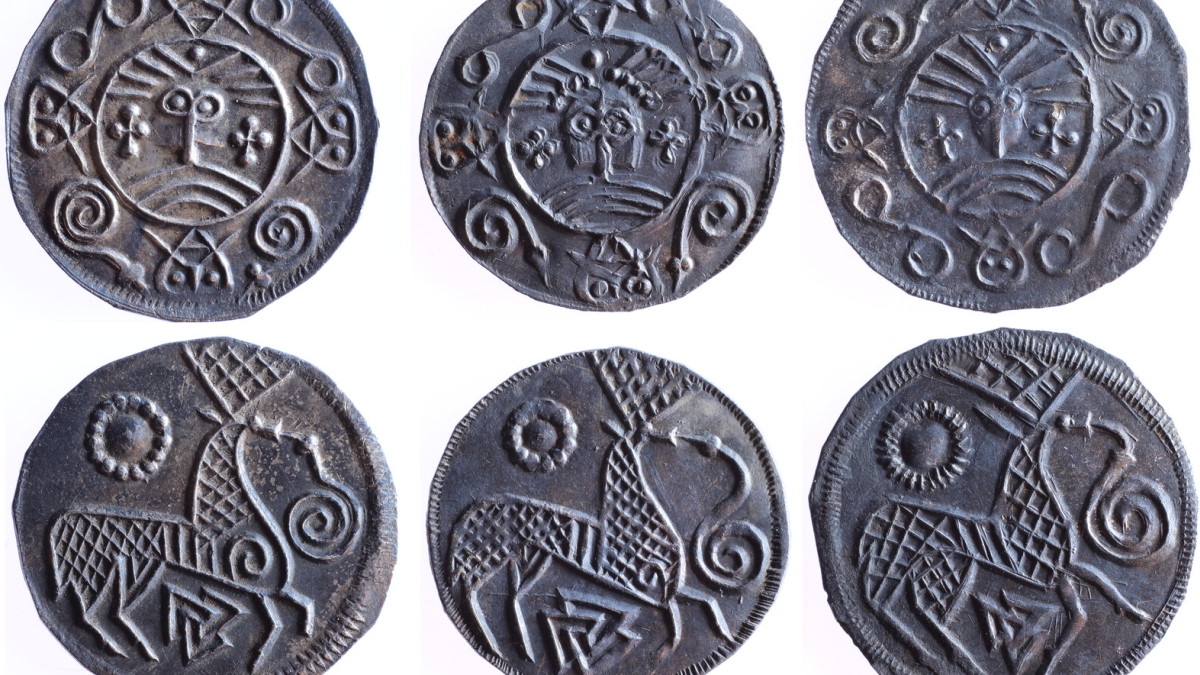
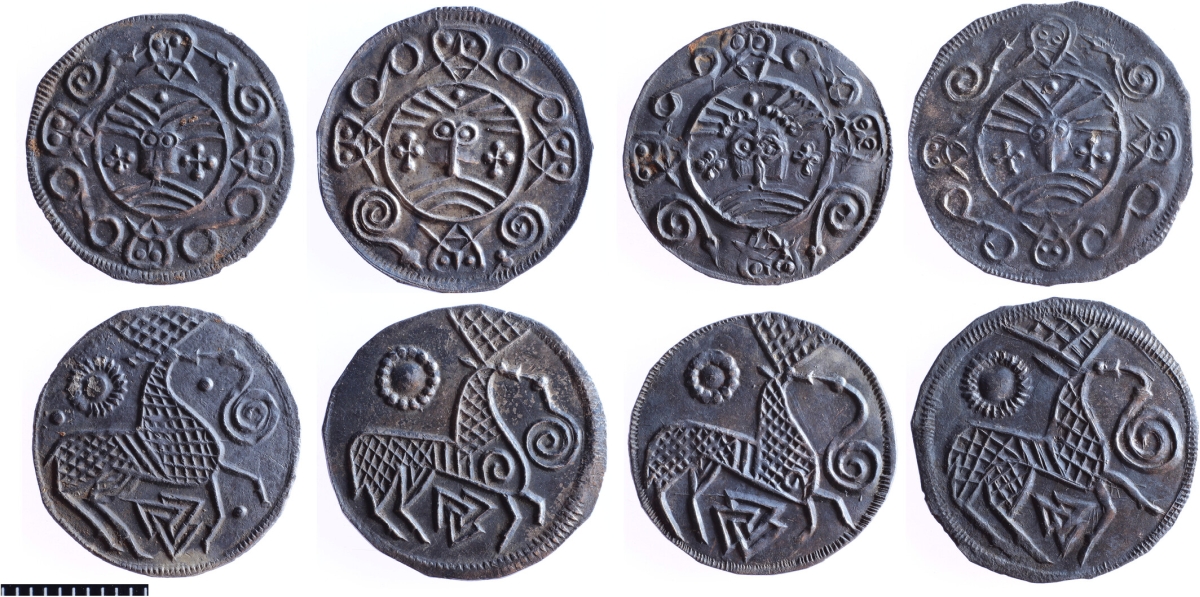
In 2018, the 'Damhus hoard,' consisting of 266 Viking-era silver coins, was discovered near Damhus, south of Liebe, Denmark. The coins are a type of early silver coin minted in Liebe in the first half of the 9th century, and 262 of the 266 coins depicted a face on one side and a deer facing forward on the other. This type is thought to have begun to be minted around 820-830 AD and is part of the early silver coins produced in Liebe, considered the first town in Scandinavia. The following photos show examples of the 'face/forward-facing deer' type silver coins included in the Damhus hoard.
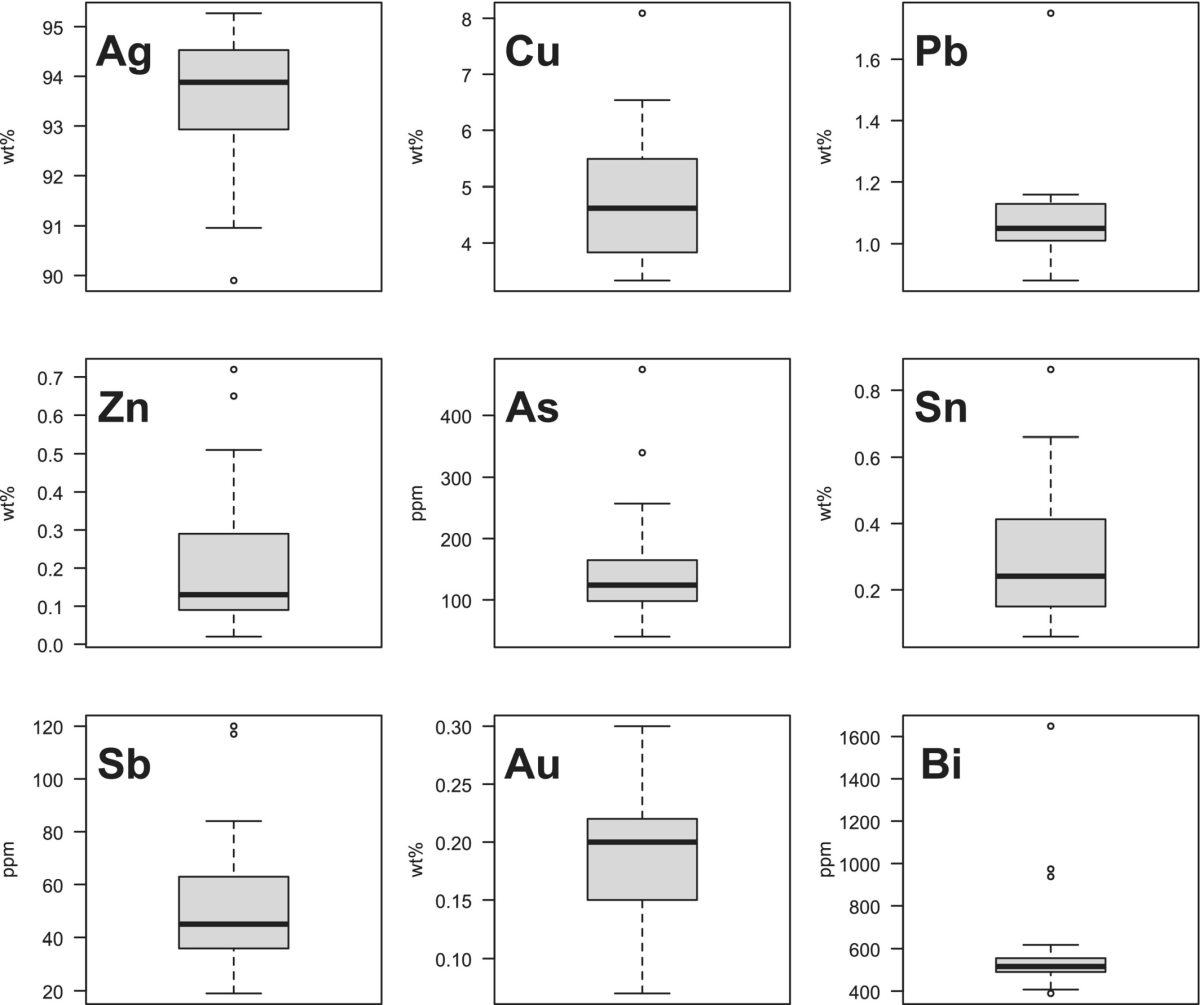
The research team selected 25 silver coins from the Damhus deposit and analyzed the elements and lead isotope ratios contained in the coins. As a result, it was found that the Damhus silver coins were a relatively homogeneous alloy containing approximately 94% silver, 5% copper, and 1% lead. The graph below shows the distribution of silver (Ag), copper (Cu), lead (Pb), zinc (Zn), arsenic (As), tin (Sn), antimony (Sb), gold (Au), and bismuth (Bi) in the silver coins that were analyzed.
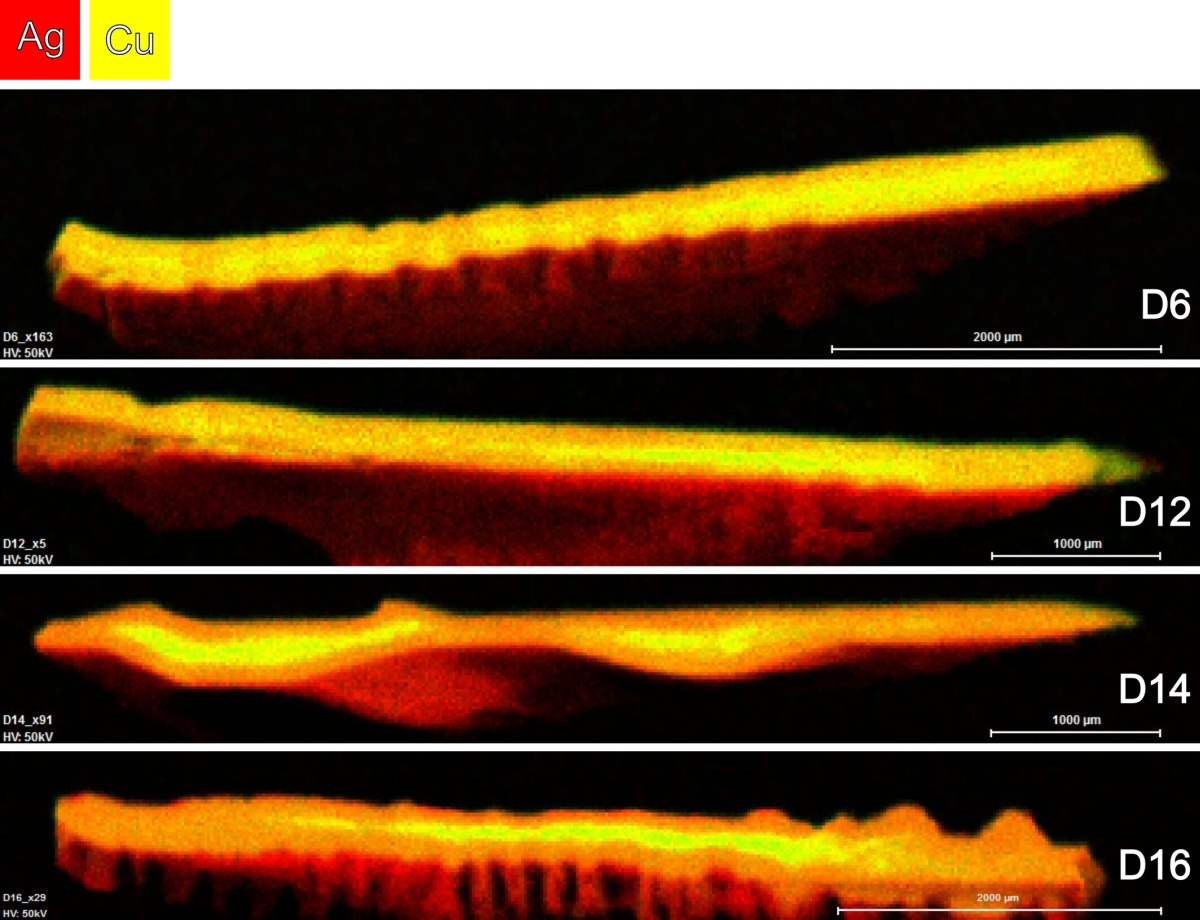
Because the surface of the silver coin showed areas that had changed since it was buried, the research team examined the metals used inside the coin. Below is an elemental map of the cross-section of the silver coin, with red representing silver and yellow representing copper.
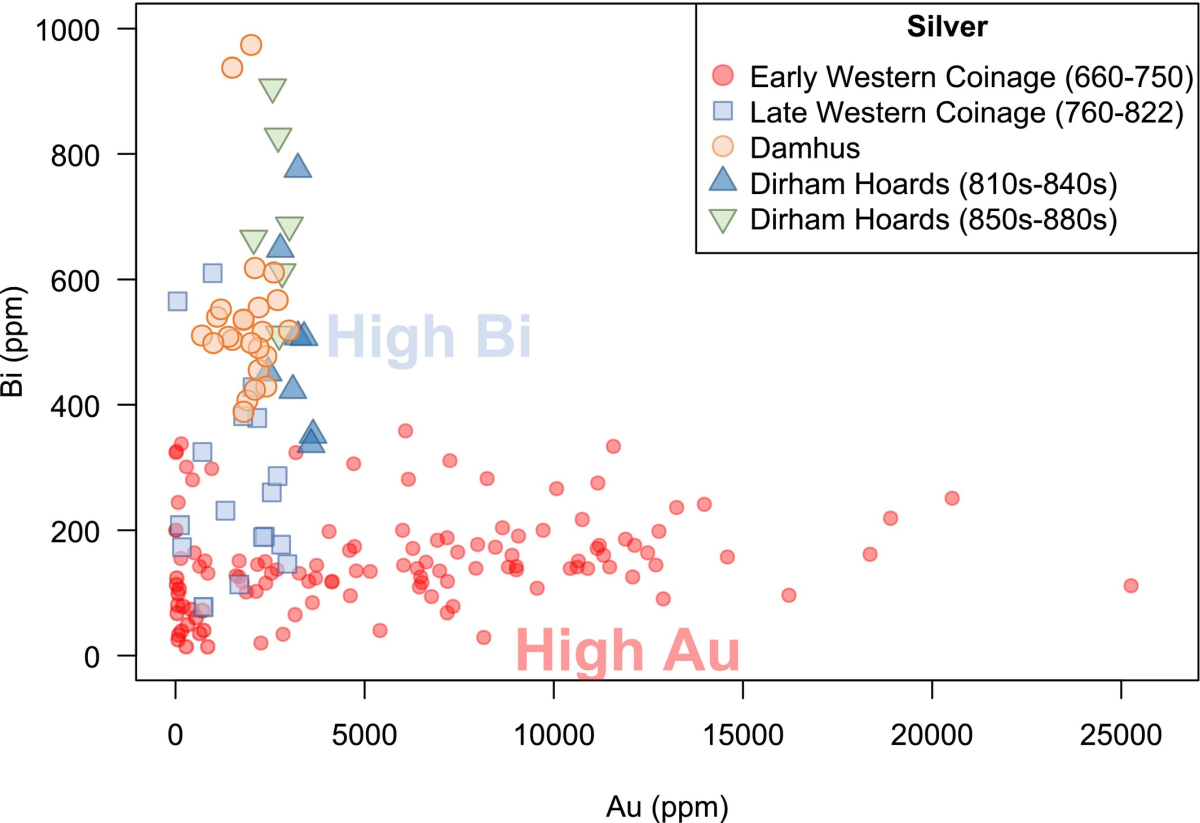
The research team also considered the possibility that Anglo-Saxon, Phrygian, and Merovingian silver coins from around the 8th century were used as the material, but concluded that it was unlikely these older Western European silver coins were the main source because the gold and bismuth content did not match that of the Damhus silver coin. On the other hand, the composition of the Damhus silver coin closely matches that of Carolingian and Anglo-Saxon silver coins from the first half of the 9th century, and its gold and bismuth content and lead isotope ratios fall between those of Western European silver coins and silver derived from Islamic dirhams.
In the graph below, red dots represent early Western silver coins, blue squares represent late Western silver coins, orange circles represent Damhus silver coins, blue triangles represent dirham deposits from the 810s to 840s, and green inverted triangles represent dirham deposits from the 850s to 880s. It can be seen that Damhus silver coins are clustered not with the older Western silver coins, but rather with the later Western silver coins and dirham deposits.
The dirham was a silver coin used in the Islamic world, and large quantities of it flowed into Northern Europe during the Viking Age. However, in Denmark, there are few examples of large quantities of dirhams being found in archaeological sites dating back to before 850 AD. Therefore, the important point of this study was not the silver coins themselves, but rather that 'the composition of the silver indicated the influx of Islamic silver before 850 AD.'
The research team concluded that the composition of the Damhus silver coin 'is consistent with a mixture of Western European silver coins from the first half of the 9th century and a homogenized silver stock derived from dirhams.' In other words, it is highly likely that some of the earliest Viking silver coins were made not only from Western European silver that they had on hand, but also from silver that arrived from the distant Islamic world.
However, Islamic silver did not necessarily arrive in southern Scandinavia in the form of dirham coins; it may have been melted down and transported in the form of silver bars, ingots, or rings. Thomas Birch, a member of the research team, explains that the silver used in the Damhus coins 'did not come directly from the mine, but was melted down somewhere after being used as dirhams.'
Related Posts:


in Science, Posted by log1b_ok