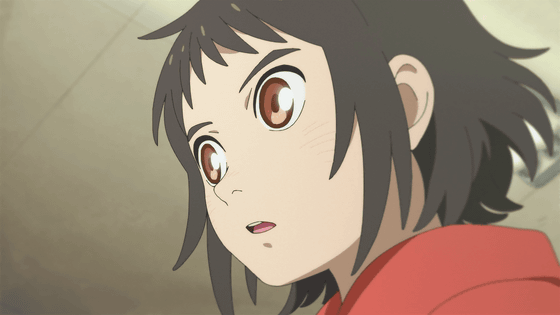
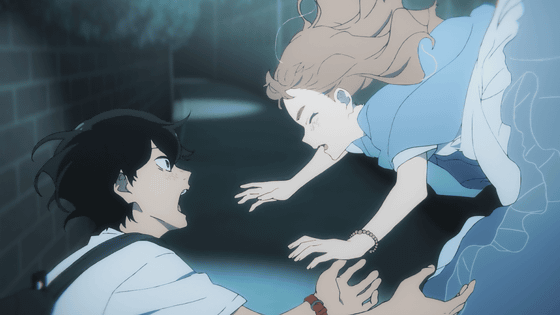
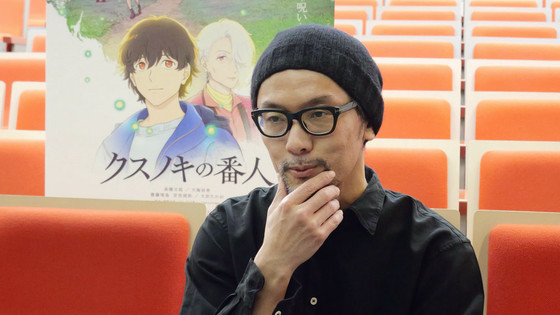
A report on the talk event for the film 'Shiranuhi,' directed by up-and-coming director Ryo Katanosaka, which depicts a complex parent-child relationship where 'prayer turns into a curse.'

' Shiranuhi, ' the latest short animated film from CoMix Wave Films, the studio behind the mega-hits 'Your Name.' and 'Suzume no Tojimari,' will be released on August 21st, 2026 (Friday). This film marks the first commercial animated film for director Ryo Katanosaka. At
Official website for the movie 'Shiranuhi'
https://gaga.ne.jp/shiranuhi/
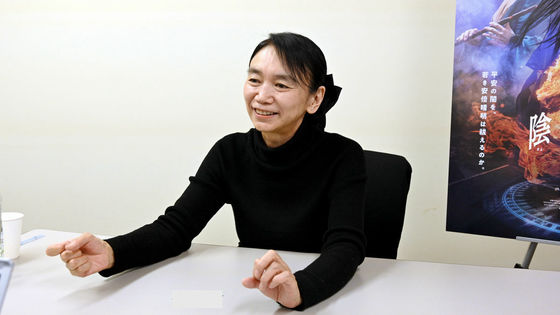
The event was held in Theater 1 of ufotable CINEMA. From left to right: Producer Arai, Director Katanosaka, and Producer Hamasaki.

Shuhei Hamasaki, producer at CoMix Wave Films (hereinafter, Hamasaki):
Hello everyone. This is the first time for the three of us to participate in Machi★Asobi, and wow, the energy is incredible! And it's so hot! I only brought two T-shirts, that was a mistake. What do you think of Machi★Asobi?
GAGA Producer Shuhei Arai (hereinafter, Arai):
hot…….
(Audience laughs)
Director Ryo Katanosaka of 'Shiranuhi' (hereinafter, Katanosaka):
I checked the temperature beforehand and had prepared an extra T-shirt for this moment.
(A voice from the audience says 'Oh!')
Hamasaki:
Let's start with a brief self-introduction. First, the director.
Katanosaka:
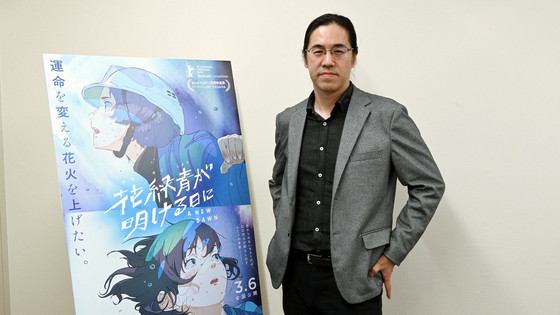
My name is Ryo Katanosaka, and I directed this film, 'Shiranuhi.' It's a pleasure to meet you.
Arai:
My name is Arai, and I'm a producer at the film company Gaga. I've been involved with this project from the very beginning, and I'm here today in this capacity. It's a pleasure to meet you all.
Hamasaki:
The moderator is Hamasaki, producer at CoMix Wave Films. Nice to meet you. We'll start with 'CoMix Wave Films' New Challenges,' and the three of us will be discussing our new theatrical release, 'Shiranuhi.' First, I'd like to give a brief explanation of 'CoMix Wave Films.' From Gaga's perspective, what kind of company is CoMix Wave Films?
Arai:
Of course, I think everyone associates them with the works of director Makoto Shinkai, but they also have other works like 'Shikioriori' (2018) and 'Peeping Life' (2009-), so I have the impression that they are a studio that cherishes original works.
Hamasaki:
Thank you, that's a perfect answer. We at CoMix Wave Films operate under the rule of 'not adapting existing works,' and we compete by creating original films. We own our own IPs and we make anime every day with a sense of responsibility to be a top runner in this industry. In addition to the works you mentioned earlier, we have also created original works other than those directed by Makoto Shinkai, such as 'Makasete Iruka!' (2004) and 'Kakurenbo' (2005). After 'Suzume no Tojimari' (2022) was released, there were no original works other than those by Director Shinkai, so we started planning 'Shiranuhi' because we felt we had to do something. Before we delve deeper, I would like you to watch the trailer first.
Hamasaki:
Thank you. I think there are some people who are seeing it for the first time. Director Katanosaka is currently working on it in preparation for its theatrical release on August 21st.
Katanosaka:
Let me reintroduce myself. I'm director Ryo Katanosaka. I've never actually worked in animation. What I've been doing is live-action, independent films and things like that. The reason I was making independent films is that when I was in kindergarten, I saw 'Jaws' (1975) and thought, 'Ah, I want to make 'Jaws 5.' I'll become a film director,' and I continued pursuing that vague dream.
At university, I learned a lot about film from director Nobuhiko Obayashi. While I was a student, I also worked on set, and there were so many people who came into the live-action film industry saying they 'wanted to be directors.' But even though there were so many people who said they 'wanted to make movies,' there were hardly any who had actually made a movie. Seeing that reality, I thought, 'I have to make movies.' If I make a movie, I'll be a film director too.
Because of all that, when it was time to look for a job, I told Mr. Obayashi, 'I want to make movies, so I won't be getting a job.' Director Obayashi then advised me, 'That's great. That's the right thing to do. Just be careful, being a film director is a lonely job.' At the time, I replied, 'Yes! I know! I'll be fine!' even though I didn't understand anything (laughs).

(Audience laughs)
Katanosaka:
After graduating, I worked part-time jobs and did various other things, and it wasn't until I was 26 that I was able to shoot my first feature film. One of my goals was to give up on this path if I hadn't shot a single film by the time I was 27, because Spielberg shot 'Jaws' when he was 27. But somehow, things came together and I was able to shoot it. So I thought, 'Great, God is telling me it's okay,' and I continued to shoot films in Kyoto.
Then came the COVID-19 pandemic, which you all know about. I couldn't make a living from just one film, so I was taking on various video production jobs, but those also disappeared, and I felt like everything was a blank slate, slipping through my fingers. I lost everything I believed in, everything that had been my sustenance, and I thought, 'What should I do? How am I going to survive?' At that time, I happened to be thinking about a feature-length animated film project. So I thought, 'Since I have the time, I might as well give it a try,' and I spent about three years holed up working on it, studying on my own by watching Blu-rays of works by predecessors frame by frame.
Just a moment ago, Ryoichi Mori, the director of 'Peeping Life,' came to my hometown of Fukuoka Prefecture, and when I showed him my finished work, he said, 'You shouldn't stay in Fukuoka. I'll introduce you to Mr. Kawaguchi (of CoMix Wave Films), so go to Tokyo. I don't know what will happen when you show it to him, but try your luck.' That was theきっかけ (trigger/reason) that led me to enter the animation industry.
I first met Mr. Kawaguchi three years ago on February 8th. I'll never forget it. I was visiting his company when he suddenly appeared and said, 'Hey!' (laughs)
(Audience laughs)
Katanosaka:
It was truly an incredible experience...and at that moment, I immediately thought, this person can see everything in an instant. They could see deep into me, and I knew I could never lie in front of them. So I decided to be clear about what I didn't know and what I wanted to do, and I spoke to them. It was like an interview, including Hamasaki-san, about 6 to 1.
(Audience laughs)
Katanosaka:
What was it like again?
Hamasaki:
Each person shared their thoughts on the artwork.
Katanosaka:
I think they saw the work I had created first. Hamasaki-san said at the time, 'I want to work with you right away,' but I really had no experience in animation, so I ended up studying as a production assistant for commercials at CoMix Wave Films. Kawaguchi-san told me, 'Then come in from April!' and I was like, 'Huh? Is that even possible?' When I got back, everyone asked me, 'How was it?' and when I explained it exactly as it happened, they were like, 'Is that for real?' When I asked Director Mori, 'They told me to come in from April, is that for real?', he said, 'Isn't it for real?'
(Audience laughs)
Katanosaka:
That's exactly how it went. In March, I got a message from Hamasaki-san saying, 'You'll be able to come, right?' and I thought, 'So that conversation was actually alive!'

(Audience laughs)
Hamasaki:
You might not understand yet why I said I wanted to work with him, but Director Katanosaka had been creating an original piece that was about 3 minutes long. This time, we'll be showing you a part of it exclusively at Machi★Asobi.
(After a portion of the original film was screened, the audience applauded.)
Hamasaki:
I was really impressed. I genuinely thought, 'I want to work with them.' I'm sure everyone feels the same way, right?
(applause)
Hamasaki:
Thank you. So, we decided to work on the project together, and now let's talk about 'Shiranuhi.' Director, how did 'Shiranuhi' come about in the first place?
Katanosaka:
'Shiranuhi' is set at the former Akasaki Elementary School, a 'school on the sea' located in Akasaki, Tsunagi Town, Kumamoto Prefecture. When I was around 25 years old, I was working as a fishmonger in Amakusa, filleting fish, and thinking about making movies. At that time, I thought I wanted to shoot a movie at this former Akasaki Elementary School. It had been closed since 2010, and because it stands on the sea, it was affected by salt damage and deterioration, and I realized that if we were to shoot a movie there, it would require a considerable amount of money to restore it. So we hit a wall, realizing that we couldn't do anything we wanted with our budget. But I couldn't give up on the story, and I kept thinking about it while filleting fish and doing other video work, and that's how 'Shiranuhi' really began. So, the concept had been in development since the 2010s.

Hamasaki:
We've been discussing this since the planning stages, but what kind of work is 'Shiranuhi'?
Katanosaka:
I'm not sure if the trailer conveyed it to everyone, but to put it bluntly, children abandoned by their mothers, children caught up in adult affairs, are rapidly 'made' into adults. I've witnessed that moment firsthand, and I offered them what I thought was love and the right words, but instead of protecting them, I only hurt them. That has become a lifelong regret that I can never erase. These things actually happen, but when you investigate, you find that the parents also have their own circumstances, and there's also the 'curse' that the parents have placed upon the children. It's a vicious cycle. I made this film with the hope of somehow breaking that cycle through cinema.
Hamasaki:
The director's thoughts and feelings are truly packed into these little over 30 minutes, resulting in a film that is 100% pure of the director's vision. I heard the director's passionate feelings, but could Producer Arai give us a brief overview of the story without any spoilers?
Arai:
It's hard to avoid spoilers... There's a boy named Minato and a female goddess named Ben-chan. You might think it's just their story, but Minato's father gets involved as well. The tagline is 'That prayer will turn into a curse,' and I think one of the highlights will be how the relationship between Minato and his father changes.

Hamasaki:
Yes, I think the most interesting part is what Minato wishes for in the end. What Minato wishes for is the 'Shiranui,' which is also the title of the film. It's a real phenomenon, and we were actually able to see it while scouting locations, so please take a look at the photos.
Katanosaka:
This is Bentenjima Island in Akasaki, where the story takes place. You might think the lights in the background are town lights, but they're actually 'Shiranui.' There's a town called Shiranui in Kumamoto Prefecture, but you rarely see them there; they're quite common in Akasaki. However, the people of Akasaki don't think of them as Shiranui. They don't seem to pay much attention to them, and when you talk to the locals, they'll respond with 'Really?' An elder-like figure said, 'The ones I saw were like the ones I saw from the top of a mountain when I was in elementary school,' but I told him, 'No, no, it's the ones you see now.'

(Audience laughs)
Katanosaka:
At night, the Shiranui glows even more intensely, shining almost comically. You might think it's just town lights from the photos, but if you actually go to Akasaki and see it, you'll realize it's not 'light' because it's not a light source. It looks like light because it's captured with a high-sensitivity camera, but it's actually something hazy and truly mystical. I imagine people in the past who saw the Shiranui must have been terrified.

Hamasaki:
The title, 'Shiranuhi,' is actually derived from this. Next, I'd like to talk about where we poured our energy and feelings into 'Shiranuhi.' Animated works begin with creating a scenario and story and drawing storyboards, but what was your experience like, Director?
Katanosaka:
In scenario development, the first thing we do is come up with the core plot, and that takes three years...
Hamasaki:
I agree…….
Katanosaka:
I'd been working on this with Arai-san and Hamasaki-san for a long time, and for the past three years, I've felt that 'telling a story in 30 minutes is extremely difficult.' The 'children' I used as my motif tended to become a boy-meets-girl story, where 'a boy and a girl meet,' 'they become friends,' 'they face difficulties,' 'they overcome them,' 'they face further difficulties,' and 'they overcome them.' I think this is probably the ideal three-act structure, but it would be almost impossible to depict that in 30 minutes. I thought about it a lot for about two years.
Arai:
We considered many different patterns, and after many twists and turns, we created quite a number of scenarios, thinking things like, 'If this doesn't work, how about this?' or 'That didn't work, so let's try again.'
Katanosaka:
After two years of writing screenplays, I had reached a point where I felt like, 'If I can't write anything like this anymore, then I can't do it.' From a practical standpoint, I also felt that what I was writing wasn't something that could be done professionally. It was my own fault, but I was pushed into a corner and thought, 'How can I fit this screenplay into 30 minutes?' That's when I had a reverse idea: 'What can I depict in just 30 minutes?' I decided to use everything I had, everything I had, to create something that the audience could only see in 30 minutes. Once I did that, the blockages suddenly cleared up, like a bone had been removed from my throat. The plot for this project came to me in two weeks, the script was written in about a month, and then the storyboards were finished in a month and a half.
(Exclamations of admiration from the audience)
Arai:
At first, I was kind of trapped by the idea of something like a juvenile story or a boy-meets-girl story... Juvenile stories are a standard genre in anime, but when 'Shiranuhi' was simmered and distilled in the way the director just described, I think it was purified into a story that confronts people's hearts, as you saw in the video earlier.

Hamasaki:
We really revised the story many times. In reality, it wasn't good, but in the process of refining it, there was one version that we decided to go with. I don't even remember how many versions it was, but we started to move on to the actual work.
Katanosaka:
Yes. In fact, we cut out about 40 minutes' worth of storyboards, right?
Hamasaki:
This was originally planned as an opening sequence for commercial use and was shelved, but I thought I'd make an exception and show it to you all today.
Katanosaka:
By the way, I created this all by myself, while also developing the scenario and drawing the storyboards.
Arai:
The script for this project is different from the one that was completed this time, so the content is a little different, but I was excited because I had been experimenting with it.
Hamasaki:
This was completed entirely by the director, so please do take a look.
(Video screening)
Arai:
It's a whale.
Hamasaki:
Whales have appeared as a motif again this time. The director handled everything himself, from the effects and backgrounds to the characters.
Katanosaka:
This was a parallel project, so it took about two months.
Hamasaki:
This footage will never be released to the public, so I was a little happy to be able to show it to you all here. Thank you.
Katanosaka:
We were able to perform the burning ceremony (lol).
Hamasaki:
On the set of 'Shiranuhi,' the director is thoroughly involved in the production. He's not an animator by training, but he creates the preliminary drawings for the animation. 'Shiranuhi' is 34 minutes long and consists of 322 cuts, which is roughly a little more than a 30-minute TV series. In a typical TV series these days, 320 cuts would be divided among 10 or 20 people. Sometimes it might even be 30 people, but how many cuts did the director draw himself this time?
Katanosaka:
220... no, maybe around 240?
Hamasaki:
He drew 240 out of the 320 himself.
Katanosaka:
About six months, I guess.
Hamasaki:
He's incredibly talented, even though he's not an animator by training. There was a good reason why I wanted him to direct it. Animation is usually done through a division of labor, but since this is Director Katanosaka's first work, I wanted to go with '100% pure Katanosaka Ryo.' Even if it was a little rough around the edges, that's part of Katanosaka Ryo's style, and I wanted him to pour his whole soul into it. I imagine it was a bit challenging, but how was it?
Katanosaka:
It was tough!

(Audience laughs)
Katanosaka:
I didn't really understand the anime industry myself, so I just did my best. I just drew. I drew when I woke up. I ate and drew. I continued that kind of life for a long time. It was the same when I was working on live-action, but one of the things I did myself was to act myself. I incorporated a method acting technique. It's an acting technique that Robert De Niro uses, but I tend to get too immersed in it. This story, because of its theme, took an extraordinary toll on my mental state, and there were several times when I thought, 'This is dangerous if I continue like this.'
Hamasaki:
Yes, if I were to start on a second project, I think I'd need to properly consider how to make it (laughs).
(Audience laughs)
Hamasaki:
One interesting approach this time is that the first five cuts of the story were created using the cel animation technique that was used in the animation industry in the past.
Katanosaka:
This is a hand-painted cel, hand-traced. The lines were also traced with a pen.
Hamasaki:
If you watch the movie, you'll notice that the beginning has a slightly different feel from the middle and later parts. This is because it's done using cel animation, so I hope you'll pay attention to this as an interesting point. The slight unevenness in the lines and other aspects of cel animation give it a nice touch. Did the director paint the cels himself?
Katanosaka:
Initially, I had planned to color the animation cells as well, but I was so overwhelmed with the drawing that I couldn't.
Hamasaki:
Next, let's paint it.
Katanosaka:
Oh... I'll paint it (lol)
(Audience laughs)
Hamasaki:
We've been talking about the artwork so far, but we've also put a lot of effort into the music and the cast for this film, so I'd like to ask Mr. Arai to tell us about those aspects.
Arai:
We had composer Taro Umebayashi join us for the music. We used a technique called 'film scoring,' where music is set to match the visuals. When Mr. Umebayashi first spoke with the director, he also saw some footage of the film. What was it that he saw? Was it the video concert?
Katanosaka:
This is a V-con for the preliminary voice recording.
Arai:
It seems that Umebayashi was deeply moved by the music, so we made sure to have a meeting for each and every song. Normally, in anime production, we have a sound director, but Director Katanosaka had a live-action film-like approach, so we didn't have a sound director. Instead, we worked on the music selection scene by scene, deciding 'what kind of music is appropriate for this place,' and even down to the frame by frame, saying 'we want music up to this point.' The sound and visuals matched really well...it was great, wasn't it?
Hamasaki:
There were quite a few memorable phrases.
Arai:
The theme song is in charge of Aoba Ichiko, who collaborates with Umebayashi-san on productions. I think there are cases where tie-ins result in music that doesn't match the tone of the work, but in the case of 'Shiranuhi,' the soundtrack and theme song are beautifully unified into one worldview, so I think the music complements the director's highly pure film.
Katanosaka:
When I went to record the theme song, Aoba-san asked me, 'Director, you're always smiling, so how do you manage to create a story like that?'
(Audience laughs)
Katanosaka:
Ultimately, it comes down to smiling on the outside while crying on the inside.
Arai:
Aoba-san is a wonderful person with a mysterious aura.
Hamasaki:
The music is of a quality that rivals the visuals, so that's another highlight.
Arai:
In terms of the cast, we have Ano-san in the lead role. Some people might think, 'In this kind of project?' based on her image as a talent, but she is also quite active as an artist. I produced ' Dead Dead Demon's Dedededede Destruction, ' which was based on a manga by Inio Asano, and she was very good at getting to know the characters. Also, how should I put it... I felt that she would be able to properly take on the painful aspects of this work. Of course, there are many voice actors who are technically very skilled and are wonderfully talented, but I thought that Ano-san was the one who could create these pure, raw emotions, so I suggested it to her, and that's how the casting came to be.
Katanosaka:
I was a fan of Ano-san myself. I knew her from her appearances on radio and television, and she's incredibly straightforward. But that's not really apparent to the public, and she might not even realize it herself, but I was frustrated, thinking, 'She's the real deal, why don't people notice?' I felt that if she's the real deal, she should be featured, and I also believed that Ano-san was the real deal, so I thought she should be featured. It wasn't just confidence, but a very strong conviction. I believed Ano-san could do it.
Voice acting debut as a young boy: The recording video has arrived for 'Shiranuhi' [Theatrical release on August 21st (Fri)] - YouTube
Arai:
During the recording, there were moments where Ano-san was acting with tears streaming down her face, but the director was so focused that he didn't even notice...
Katanosaka:
In reality, we should be waiting for the baby to stop crying, but instead, we say, 'Okay, let's move on to the next one.'
(Audience laughs)
Katanosaka:
People around me probably thought, 'The director is a demon...' (laughs)
Hamasaki:
The director was crying during the voice recording session, right?
Katanosaka:
I've been crying the whole time. I was even crying while I was drawing. I just can't help crying. I draw while thinking, 'Please, be happy.' I feel sorry for putting so much pressure on him, and I'm also crying because I want him to be happy. What surprised me was that recently, in an interview on social media, Ano-san talked about playing Minato, and she said that she wished for Minato to be happy. This is really important, because the feelings I had while creating the film, the feelings I couldn't put into words, definitely took shape, and were conveyed to Ano-san without me having to say anything, and Ano-san also acted while wishing for Minato's happiness in the same way. I thought that was an important thing in filmmaking.
Hamasaki:
Once again, I think it's a really great set to work on, with the director constantly working with his hands, and everyone being pulled along by the director's energy, feelings, and spirit. We still have a little bit of time left, so I'd like to answer some of the questions from everyone who came.
Q:
Are there other anime directors who create their works using 'method acting'? Also, what kind of story was the 'Jaws 5' that the director fantasized about?
Katanosaka:
A plan for 'Jaws 5'!? That's amazing to hear! (laughs)
(Audience laughs)
Katanosaka:
First of all, regarding method acting, I should mention that I'm new to the anime industry, so I don't really know much about it. I only have my own way of doing things. However, I've heard that director Makoto Shinkai does his own voice-overs at the storyboard stage, and I think that's also a form of method acting. I think it happened naturally because he was in an environment where he had no choice but to do it himself. I also did it because I had no choice. I tend to worry about what other people think, so I felt embarrassed if I didn't immerse myself in the role using method acting.
Hamasaki:
What about Jaws...?
Katanosaka:
When I was in kindergarten, we used to knock it down with a really big battery at the end.
(Audience laughs)
Hamasaki:
Besides discussing 'Shiranuhi' today, we'd like to invite someone from our company, CoMix Wave Films, who has something to tell us. Ms. Kawaguchi, Ms. Hori, please.
Noritaka Kawaguchi, Chairman of CoMix Wave Films (hereinafter, Kawaguchi):
We wanted to do it in a flashy way, but it turned out to be a rather heavy and good story, so we're kind of done talking about movie theaters (laughs). I'm sure this film will deeply resonate with some people, to the point of changing their lives. When we were working on the script, I was like, 'If you want to do it, do it yourselves,' so this is the first time I've seen the finished product, but to put it simply, it's like a pitcher who's an amateur throwing a 155km fastball, which goes over the catcher's head and hits the fence behind him, bending the fence a little. I don't know if it will be well-received, but I think there hasn't been a film like this in the last 20 years or so. Also, after 'Your Name,' a lot of boy-meets-girl stories with beautiful backgrounds have been produced, but this one came out of nowhere. I think CWF is probably the only company that can handle this. They met well, and we thought it would be finished in about a year and a half, but it ended up being three years. Even so, having seen the latest version, I'm convinced that it really needed to take three years, and I wanted everyone gathered here to see it. Listening to the conversation today and observing the atmosphere here, I thought, 'Maybe this will resonate?' However, it won't be a massive hit.

(Audience laughs)
Kawaguchi:
If it goes over the catcher's head, it's not going to be a huge hit. But it won't (laughs), it will leave a lasting impression. The movie is released, some audience members praise it, the majority say all sorts of things, and if you take that to heart and think, 'Next time, I'll throw this kind of ball,' then if you keep doing that, one day future fans will say, 'This person became who they are because of this initial impulse,' and it will become a masterpiece. Like Makoto Shinkai's 'She and Her Cat.' I thought it was wonderful that you could feel the passion he poured into making it while working and only sleeping three hours a day. Whether he can make a sequel depends on the audience, and if it reaches the audience and makes him think, 'I want to throw this kind of ball next time,' then he'll get back on his feet, or it might be that he thinks, 'Maybe there's no need to make another one.' It was that much effort put into it. Also, what about the whale thing (opening sequence)? How could you shelve something that one person drew? It's just too sad.
(Audience laughs)
Kawaguchi:
That should be given more attention not just at Machi★Asobi, but also in making-of footage and such. And finally, just a movie theater advertisement at the end...
moat:
CoMix Wave Films is working towards opening a movie theater in Saku City, Nagano Prefecture, the hometown of director Makoto Shinkai, by 2027. The theater will have two sections, one with 70 seats and the other with 40 seats, similar in size to ufotable CINEMA, and we are striving to create a movie theater that is deeply rooted in the local community. We are working hard to make it a great movie theater that everyone will want to come and see, so we hope you will look forward to it.
Katanosaka:
Thank you all so much. An opportunity like this is truly rare. I am incredibly grateful that you have accepted someone like me, a nobody, and given me a place to make a difference. Everyone, please support 'Shiranuhi'.
Kawaguchi:
Who's the last person to debut at CWF? How many years has it been? We only have about one film every three years, so... it's been since director Yoshitaka Takeuchi of 'Shiki Oriori'? ...So, this is a memorable newcomer, our first in about eight years. Please give them your support. Thank you.
(Applause from the audience)

The poster features an even heavier tagline: ' In that light, I wished for my father's death .' What form will the wish of Minato, a 10-year-old boy played by Ano-san in a different atmosphere than when she is working as a talent, take? 'Shiranuhi' will be released nationwide at Shinjuku Wald 9 and other theaters starting August 21st, 2026 (Friday).

©2026 片野坂亮/しらぬひ製作委員会
Related Posts: