How was the Trinity test, humanity's first nuclear test, filmed?
Lost Images From the 1945 Trinity Nuclear Test Restored - IEEE Spectrum
https://spectrum.ieee.org/trinity-nuclear-test
Los Alamos National Laboratory was established in 1943 with the aim of developing the atomic bomb, and as of the time of writing, it conducts general scientific research in addition to military research. In May 2026, Emily Sale, an editor and writer at the National Security Center of Los Alamos National Laboratory, published a book titled 'Trinity: An Illustrated History of the World's First Atomic Test,' which compiles photographs taken during the Trinity test and notes from that time.
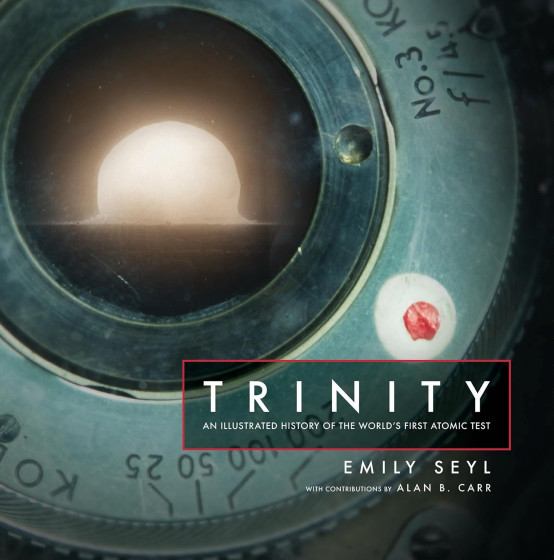
'Trinity: An Illustrated History of the World's First Atomic Test' includes testimonies from various people who participated in the Trinity experiment, as well as photographs taken at the time.
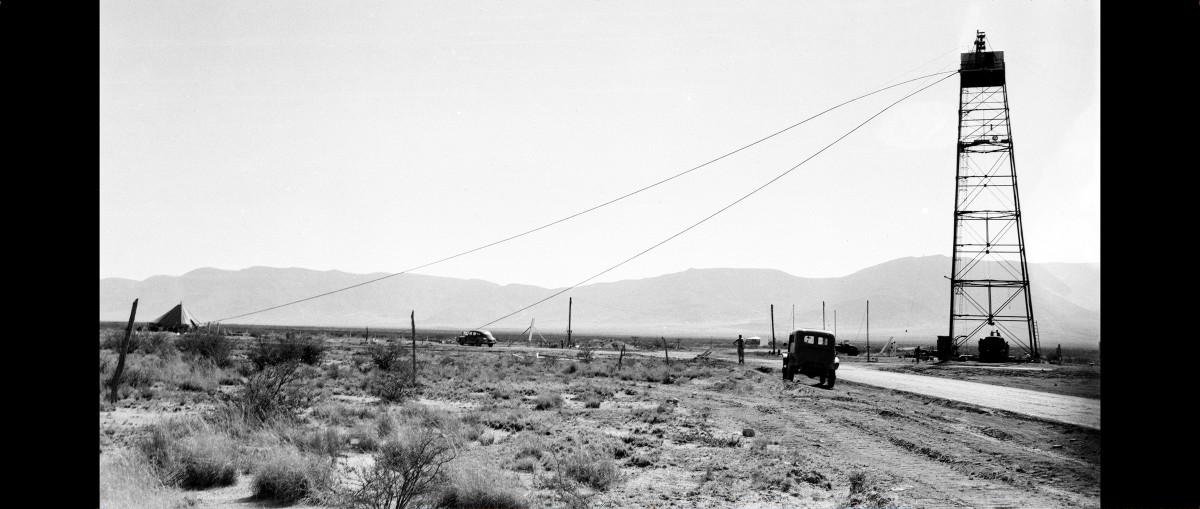
The nuclear bomb used in the Trinity test was called 'Gadget' and was placed at the very top of a 30-meter-tall tower erected in the desert.
by Los Alamos National Laboratory
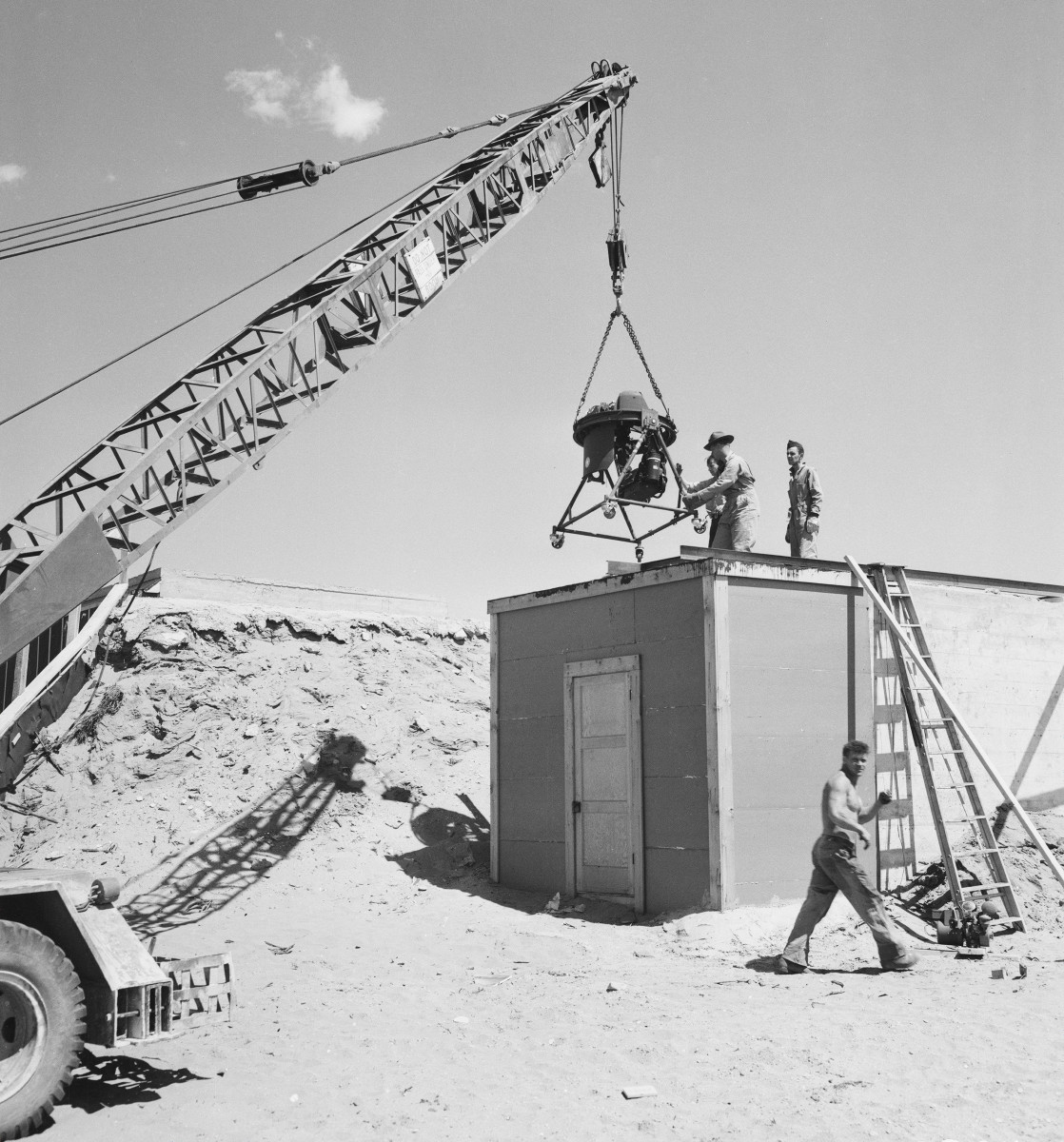
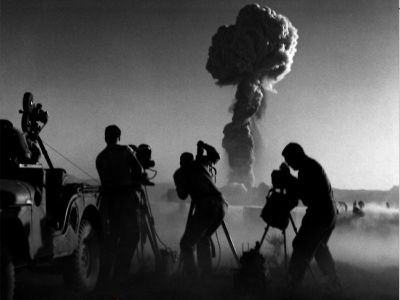
The main photographic station for the Trinity test was set up 9 km from the blast center. The photography team reportedly modified a machine gun turret to create a sturdy metal tripod, attached camera equipment to it, and mounted it on the station's roof.
by Los Alamos National Laboratory
On the roof of the air-raid shelter north of the hypocenter was
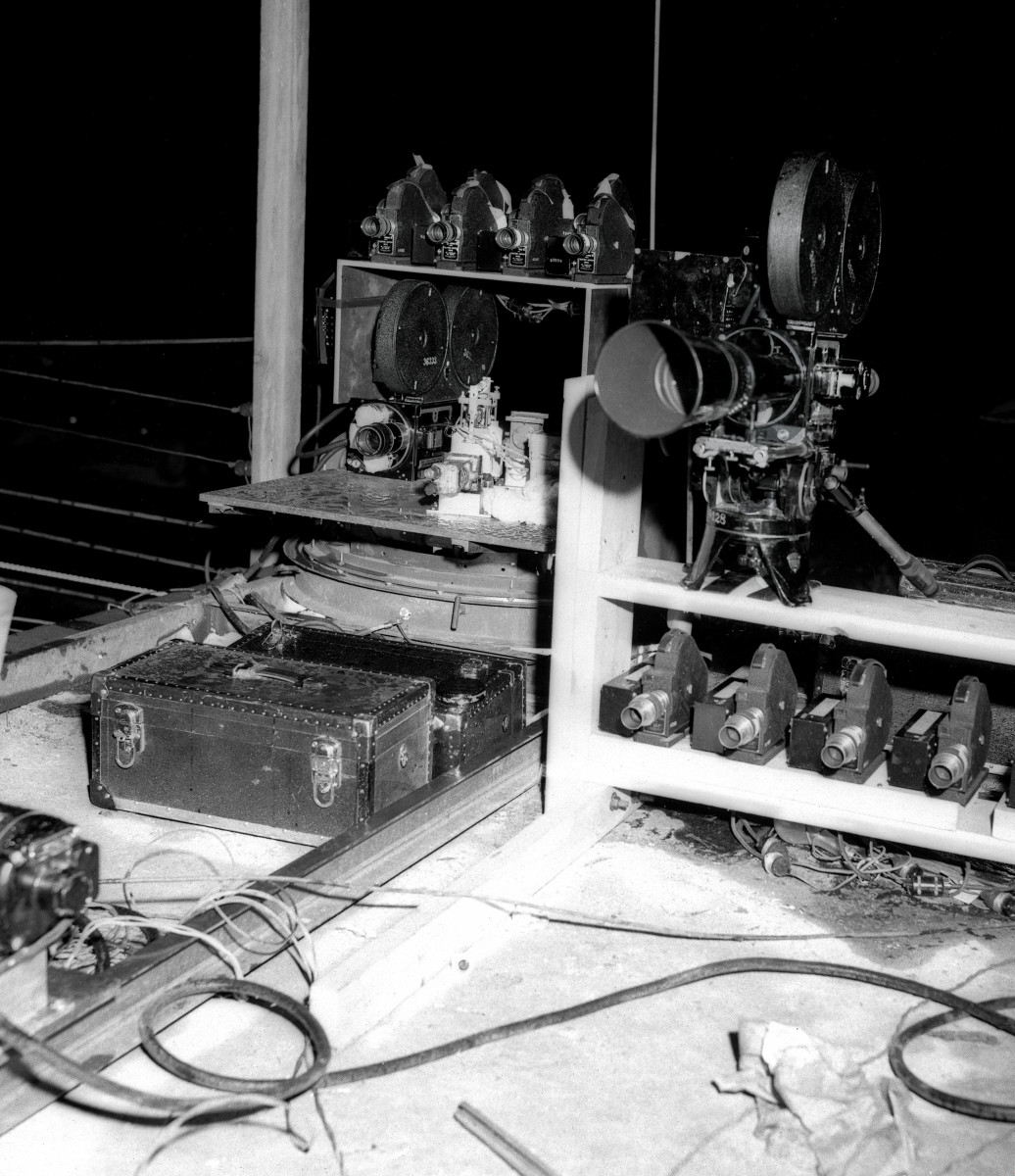
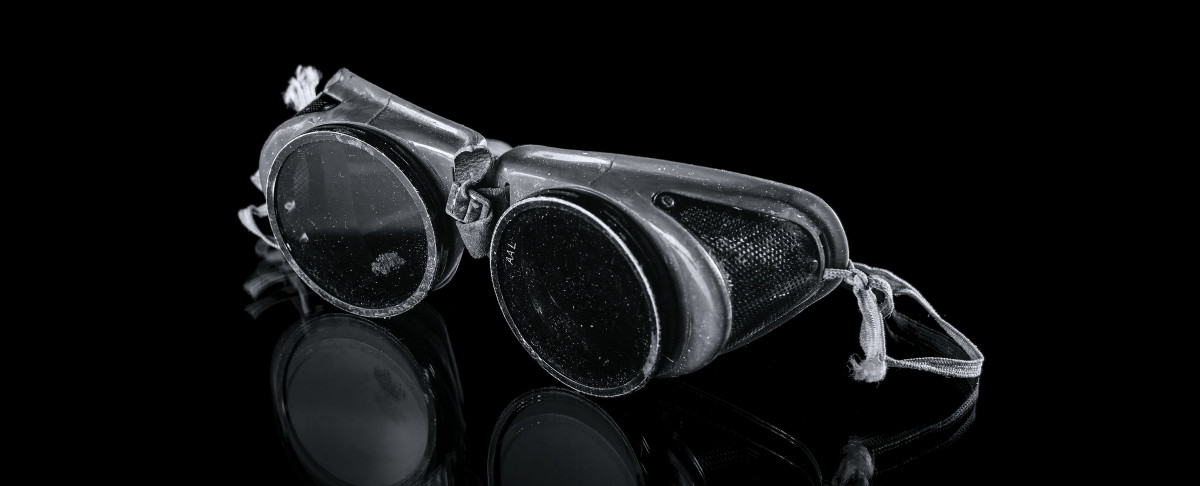
At the time, photographer Berlin Blixner, who was in the northern bunker, was wearing welding goggles like the ones shown below and had his head stuck inside the turret, which was full of cameras and film. Blixner's role was to track the fireball created by the explosion with his camera, and the Mitchell camera at his post succeeded in capturing the best images of the Trinity experiment.
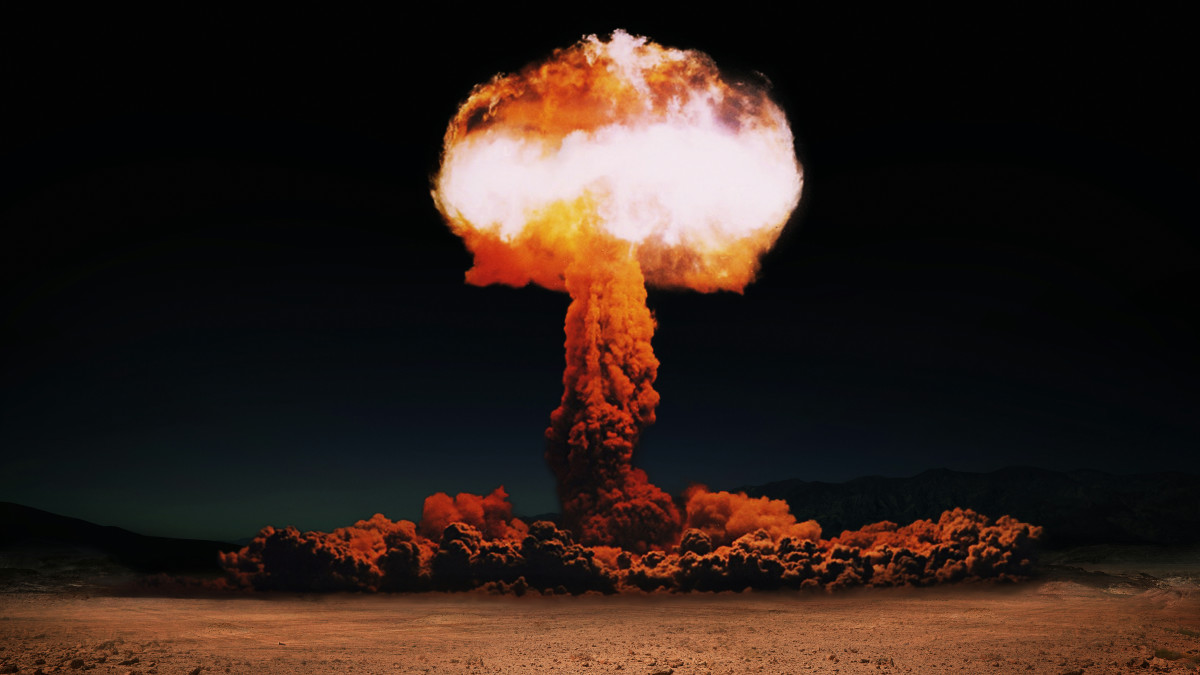
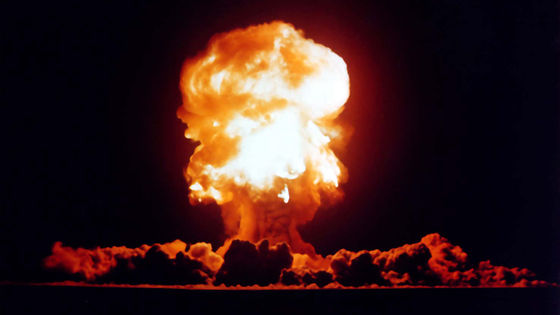
When the detonator activated, the surroundings were enveloped in an intense light, and cameras captured images of a translucent sphere blowing up the gadget. Below are photographs of the fireball and mushroom cloud taken during the Trinity experiment. The fireball expanded between 25 millimeters and 60 milliseconds, and the mushroom cloud reached a height of over 3 kilometers.
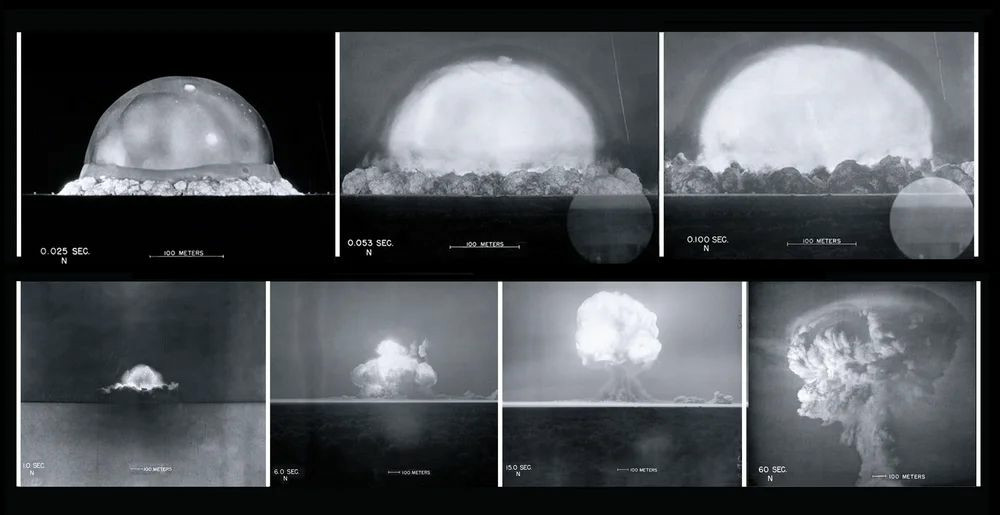
by Los Alamos National Laboratory
As the light faded and the epicenter became visible to the naked eye, people witnessed a wall of dust rising around a bright ball of fire that changed shape and glowed in various colors, and a cloud of burning flames erupting into the sky.
Physicist Norris Bradbury, who later became director of Los Alamos National Laboratory, said, 'The sight was truly awe-inspiring. Most experiences in life can be understood through past experiences, but the atomic bomb defied everyone's preconceptions. The most astonishing feature was the intense light.'
Physicist George Kistiakovsky, who participated in the experiment, said he was convinced that 'at the end of the world, in the last millisecond of Earth's existence, the last humans will see the same sight we have seen.'
Related Posts:

in Science, Posted by log1h_ik