It is possible that Neanderthals around 59,000 years ago used stone tools to treat cavities.
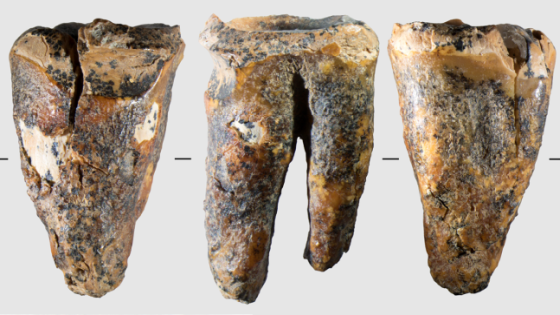
Traces suggesting that the tooth was damaged by decay and scraped away with a stone tool were found on a Neanderthal molar tooth dating back approximately 59,000 years, discovered in the Chagirskaya Cave in southwestern Siberia, Russia.
Earliest evidence for invasive mitigation of dental caries by Neanderthals | PLOS One
Neanderthal dentists used stone drills to treat cavities nearly 60,000 years ago | EurekAlert!
https://www.eurekalert.org/news-releases/1127083
The Earliest Known Dentistry Wasn't Done By Our Species : ScienceAlert
https://www.sciencealert.com/the-earliest-known-dentistry-wasnt-done-by-our-species
It has been suggested that Neanderthals may have cared for sick or injured members of their group , andthat they may have consumed medicinal plants . However, it was unclear whether these actions were intentional medical treatments or instinctive self-healing, similar to what is seen in animals.
Therefore, a research team led by Alisa V. Zubova, who belongs to the Peter the Great Museum of Anthropology and Ethnology of the Russian Academy of Sciences, analyzed Neanderthal molars found in the Chagirskaya Cave in southwestern Siberia, Russia.
This tooth, named 'Chagyrskaya 64,' is a molar from the lower jaw of an adult Neanderthal, dating back approximately 59,000 years. The biting surface has large, irregular indentations, and the research team investigated whether these indentations were caused by natural wear and tear, post-mortem damage, or intentionally created during the Neanderthal's lifetime.
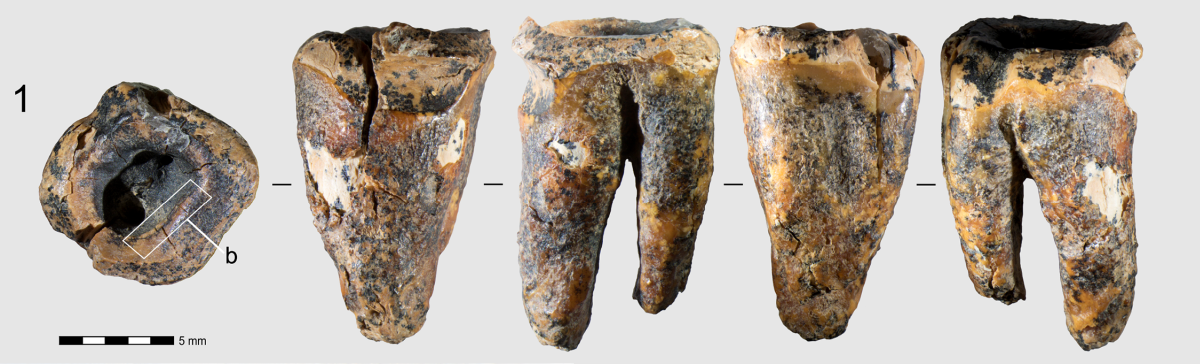
The indentation was 4.2 mm long, 2.8 mm wide, and 2.6 mm at its deepest point, and consisted of three interconnected indentations. In the magnified image below, you can see multiple indentations, indicated by white circles, overlapping within the darkened mating surface.

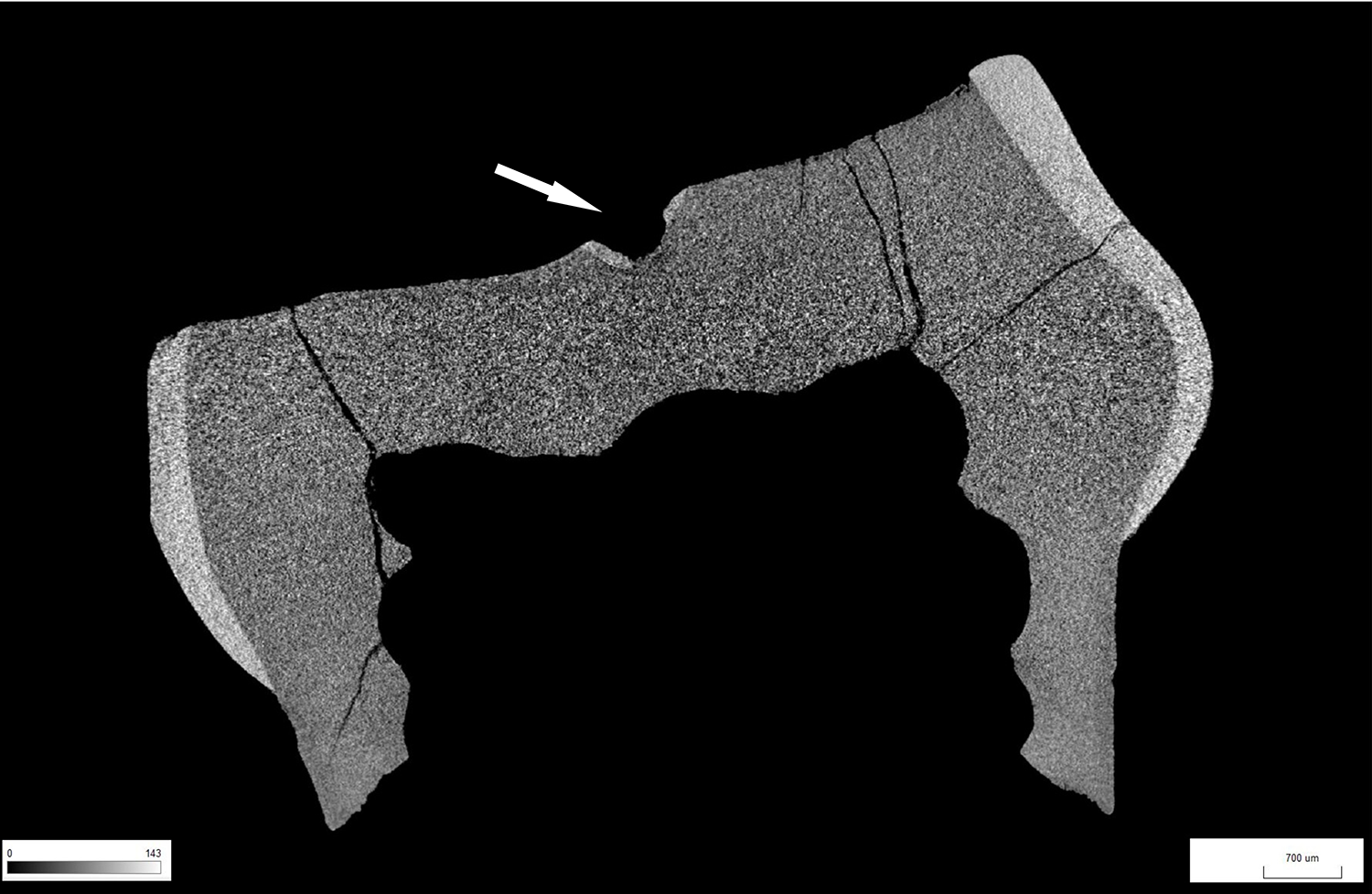
A micro-CT scan revealed that the indentation reached the space containing the dental pulp, which includes nerves and blood vessels. The following cross-sectional image shows that a large cavity extends from the area near the indentation on the occlusal surface, indicated by the arrow, into the interior of the tooth.
Additionally, there were grooves between the teeth that appeared to have been created by scraping with a thin tool, such as a toothpick. The research team believes that the presence of both large indentations and grooves on the same tooth suggests that the owner of Chagyrskaya 64 may have been dealing with oral problems in multiple ways.
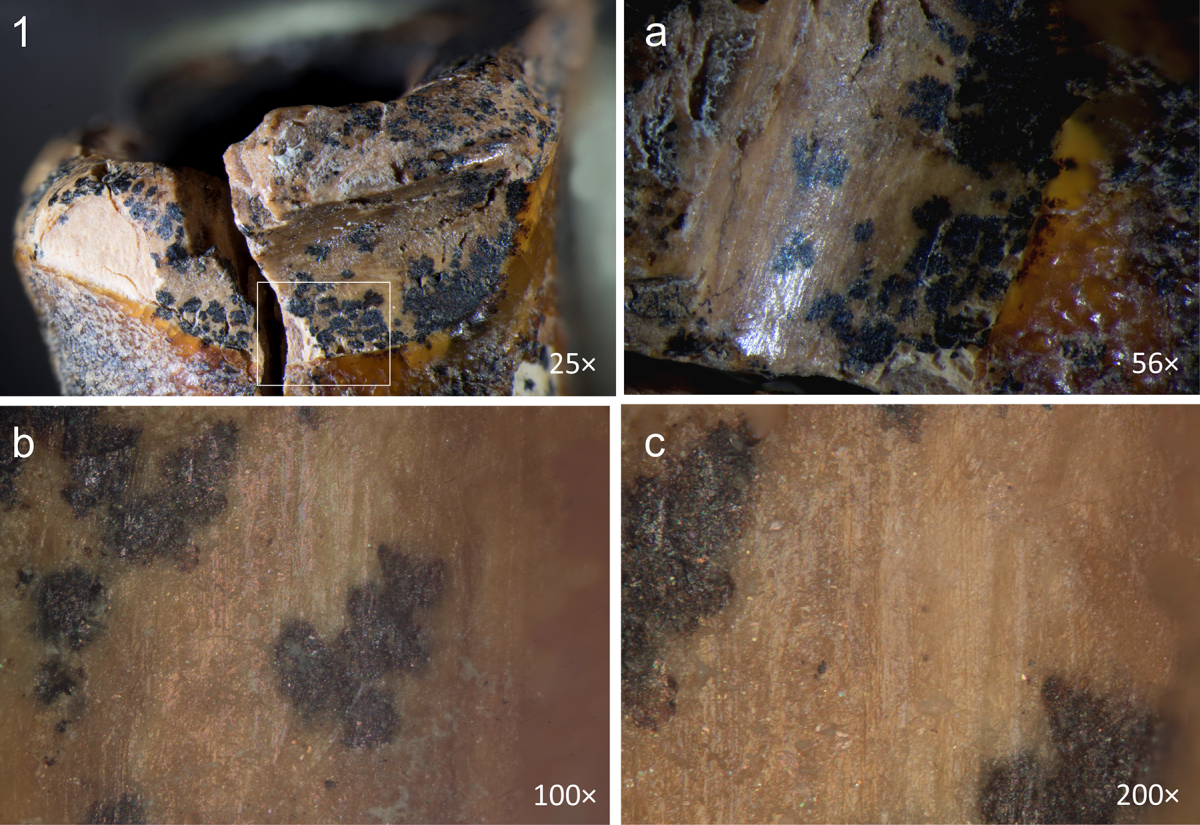
When the research team examined the surface and interior of the teeth in detail, including these traces, they found that 'the dentin inside the tooth was weakened by tooth decay' on both the inside and outside of the tooth, a condition consistent with deep tooth decay. On the other hand, other teeth found in the same cave did not show similar indentations or demineralization, and the research team concluded that it was difficult to explain this solely by postmortem damage or normal wear.
Furthermore, the research team conducted a replication experiment using three modern human teeth. In the experiment, they used pointed stone tools similar to those found in Chagyrskaya Cave, scraping the teeth and rotating the tools. As a result, they confirmed that rotating a thin stone tool by hand could create indentations and fine linear traces similar to those found in Chagyrskaya 64. The image below compares the traces left in Chagyrskaya 64 (left) with the traces created in the replication experiment using modern human teeth (right).

The research team interprets the indentation in Chagyrskaya 64 as being created by rotating a stone tool to remove decayed tissue and reach the space containing the pulp . Researcher Ksenia A. Korobova told science media outlet Science Alert, 'It cannot be explained by illness or accident. It was a deliberate manual procedure.' She also suggested that although the procedure must have been painful, removing the damaged tooth tissue may have ultimately alleviated the pain caused by infection.
Until now, the oldest known example of intentional dental treatment for tooth decay was thought to be a tooth from Homo sapiens dating back approximately 14,160 to 13,820 years, found in Lipari Villabruna, northeastern Italy. However, if Chagyrskaya 64 is indeed evidence of tooth decay treatment, then the evidence for intentional dental treatment would date back approximately 45,000 years.
The research team has not determined whether the procedure was performed by the individual in question or by another individual. However, they believe that the evidence suggesting the use of a stone tool like a dental drill indicates that Neanderthals may have understood the cause of pain and endured short-term pain to reduce long-term pain.
Related Posts:



in Science, Posted by log1b_ok