It has been pointed out that measles outbreaks not only cause serious health problems but also inflict significant economic losses on the country.

We study pandemics, and the resurgence of measles is a grim sign of what's coming
https://theconversation.com/we-study-pandemics-and-the-resurgence-of-measles-is-a-grim-sign-of-whats-coming-275059
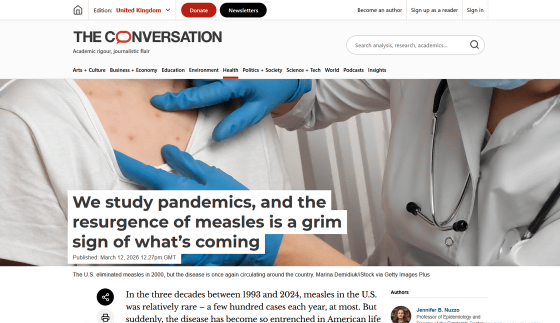
In 2000, the United States was designated a 'measles-free country' after no measles cases were confirmed for 12 months. However, in recent years, measles outbreaks have begun again, and as of March 2026, it is estimated that measles outbreaks have been ongoing for more than a year.
From January to August 2025, a measles outbreak occurred inTexas , and the infection subsequently spread to Utah , Arizona , South Carolina, and other states . Since the beginning of 2026, measles cases have been confirmed in 30 states , and health authorities have confirmed as many as 1,300 cases as of March 6th. If this pace continues, it is expected to surpass the 2025 figure, which was the highest in the past 35 years.
Nuzzo and his colleagues stated, 'We believe the resurgence of measles in the United States is a grim sign of what may happen in the future,' and went on to explain the meaning and impact of the measles resurgence.
◆Why is measles resurging in the United States?
The root cause of the measles resurgence is the decline in vaccination rates. Across the United States, the vaccination rate for the MMR vaccine , which combines attenuated viruses for measles, mumps , and rubella , is approximately 90%, but in some areas it is below 60%. A 95% MMR vaccination rate is considered necessary to achieve herd immunity , but since 2019-2020, this level has been lower, creating conditions that make the country more susceptible to measles outbreaks.
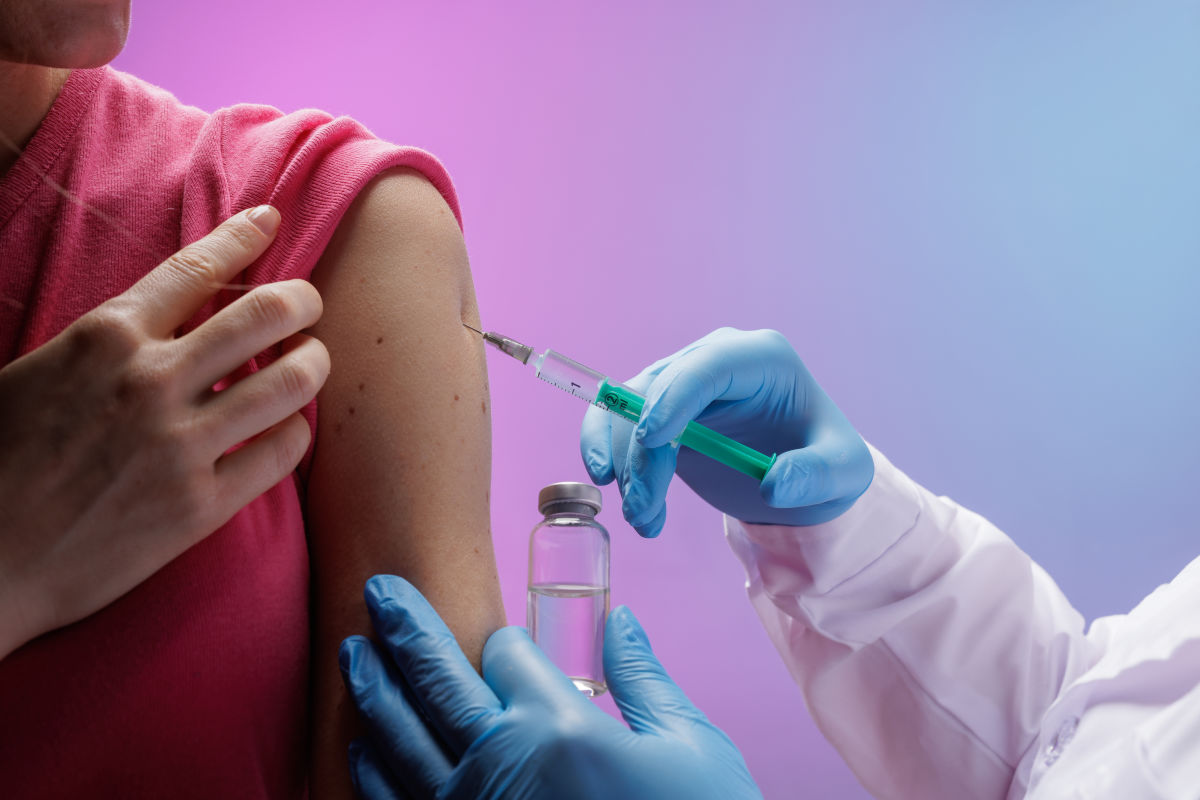
◆What are the health effects on people?
As of the time of writing, the measles outbreak in the United States is causing serious health problems,
Measles not only causes colds and fever, but also complications such as pneumonia, and is fatal in about 1 in 1,000 people. In addition, encephalitis can develop in about 1 in 1,000 people, and there is a risk of sequelae such as hearing loss and intellectual disability. Furthermore, Nuzzo and his colleagues warn that the measles virus may affect the immune system and increase the risk of infections later in life. In rare cases, if a child is infected with measles in early childhood, they may develop subacute sclerosing panencephalitis 5 to 10 years after infection, which can be fatal.
Measles causes significant economic losses for a nation.
One often overlooked consequence of measles is the significant economic loss it inflicts on nations. Nuzzo and his colleagues state, 'One of the reasons countries have strived to eradicate measles is the clear economic benefit of preventing domestic transmission of the virus.'
A 2025 study estimated that each measles case would cost an average of approximately $43,200 (about 6.9 million yen). The 2018-2019 measles outbreak in Washington state , while having a relatively modest 72 confirmed cases compared to recent resurgences, resulted in total costs, including public health measures, medical expenses, and lost productivity, reaching $3.2 million (about 510 million yen).
According to a report (PDF file) by the Common Health Coalition, an organization comprised of over 300 healthcare institutions in the United States, every 1% decrease in MMR vaccination rates results in billions of dollars in losses for the U.S. healthcare system and the overall economy.

◆ Implications for other infectious disease control measures
The procedures for preventing the spread of infectious diseases, such as vaccination, detection and isolation of infected cases, identification of contacts, and treatment of infected individuals, are common to measles and other infectious diseases. Therefore, the state of measles control can serve as an indicator of the capacity to respond to other infectious diseases. The current situation suggests that there is a risk of outbreaks of infectious diseases other than measles.
Nuzzo and his colleagues point out that public trust in the fundamental elements of public health is essential for controlling infectious diseases, but the decline in MMR vaccination rates highlights a decline in public trust. 'These widening cracks in the nation's public health system will complicate efforts to protect the American people from future threats such as outbreaks of infectious diseases, pandemics, and bioweapon attacks,' they said.
Related Posts:




in Free Member, Science, Posted by log1h_ik