Kazuo Ishiguro and 10,000 other authors publish a 'contentless book' called 'Don't Steal This Book' to protest against AI companies' unilateral use of their work.
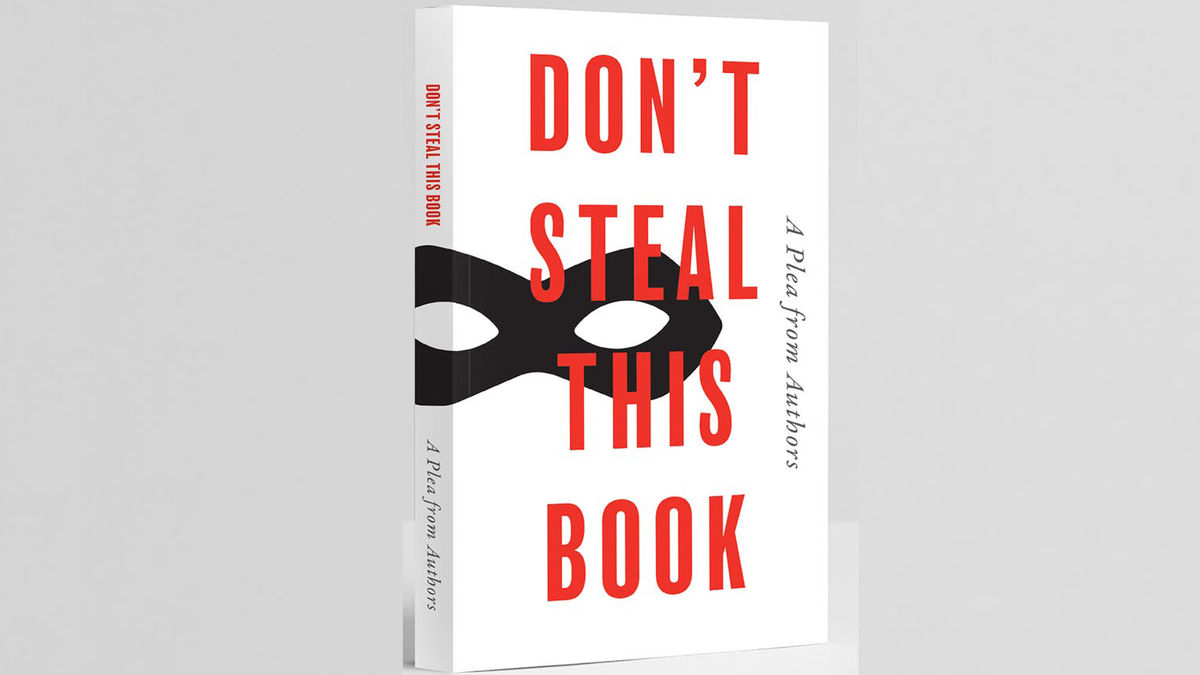
' Don't Steal This Book ,' a collaborative publication by approximately 10,000 authors, is nothing more than a list of authors' names, making it a 'blank book' with no content whatsoever. The book was created to protest against AI companies using their work without permission, and the authors who organized the publication criticized the industry, saying, 'The AI industry is built on work stolen without permission or payment.'
Don't Steal This Book
https://www.dontstealthisbook.com/home
Thousands of authors publish 'empty' book in protest over AI using their work | AI (artificial intelligence) | The Guardian
https://www.theguardian.com/technology/2026/mar/10/thousands-authors-publish-empty-book-protest-ai-work-copyright
Richard Osman and Jeanette Winterson among authors to publish 'empty book' in protest of AI using their work | The Independent
https://www.the-independent.com/arts-entertainment/books/news/author-book-protest-ai-copyright-b2935366.html
'Don't Steal This Book' features contributions from Kazuo Ishiguro , winner of the Nobel Prize in Literature in 2017, as well as writers, historians, composers, and others. You can see a list of participating authors from the ' List of Related Authors ' on the project page.
The UK government is currently considering a proposal to amend copyright law to allow AI companies to use content to train AI models without permission, unless rights holders explicitly opt out. This proposal has been met with opposition from numerous creators and lawmakers, with over 10,000 comments submitted. OpenAI and Google also expressed opposition, arguing that the opt-out system is opaque and would harm both AI companies and rights holders.
OpenAI and Google reject UK government proposal to allow AI companies to use content to train AI models without permission unless rights holders opt out - GIGAZINE

The UK government is scheduled to publish an economic impact assessment on possible changes to copyright law on March 18, 2026. Approximately 1,000 copies of 'Don't Steal This Book' were distributed at the London Book Fair, held about a week prior to the publication of the assessment. The back cover of 'Don't Steal This Book' reads, 'The UK government must not legalize book theft to benefit AI companies.'
The 'about' page of the project website also contains a protest statement that reads, 'The UK government must not legalize book theft to benefit AI companies. AI companies develop their products by copying millions of books without permission or payment. The government is considering legalizing this theft on a massive scale. We urge the government to stop this behavior. AI companies should pay for books like any other business. Otherwise we will end up with blank pages, unpaid authors, and readers deprived of their next book. Don't steal this book.'
Ed Newton-Rex, the book's organizer and composer, explained the project's purpose, saying, 'The AI industry is built on work stolen without permission or payment. This is a crime that has victims. Generative AI competes with the creators of the works it trains on, taking away their livelihoods. The government must protect UK creators and refuse to legalize the theft of creative works by AI companies.' Rex is also an activist calling for copyright protection for artists, and organized the open letter ' Statement on AI Training ,' which has been signed by 13,500 celebrities.
SAG-AFTRA and the world's largest publishers sign open letter urging companies to stop unauthorized use of creative works to train AI - GIGAZINE
Jeanette Winterson, an author who participated in the 'Don't Steal This Book' project, said, 'My message to the big tech companies is simple: if you can't actively support us (and you're not), then stop stealing our work. Your bots can't produce work like we can. Accept that and move on.' Fellow author Adam Kay added, 'It's bad enough that AI has reduced customer service to incompetent chatbots and social media to low-quality garbage. Now it's trying to destroy the publishing industry. We all pay to read books. Robots should be able to do the same.'
A UK government spokesperson responded to an inquiry by The Guardian, saying, 'The government wants a copyright system that respects and protects human creativity, is trustworthy, and unleashes innovation. We will continue to work closely with the creative industries on this issue and deliver on our commitment to report back to Parliament by 18 March 2026.'
Related Posts: