What is the 'mental ability' that separates elite athletes from ordinary athletes?
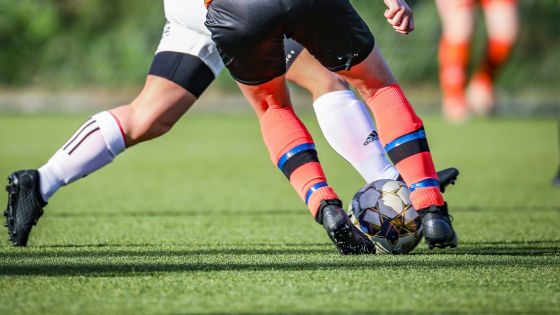
When we think of elite athletes who compete in the Olympics or as professional athletes, we often think of them as having incredible physical abilities, power, and technical skills. However, it's not just physical ability that determines victory
The mental edge that separates elite athletes from the rest
https://theconversation.com/the-mental-edge-that-separates-elite-athletes-from-the-rest-273758

It goes without saying that elite athletes have superior physical abilities and technical skills, but split-second decision-making is also important in top-level competitions. For example, a basketball player with the ball can take advantage of an opening in the defense to shoot, a soccer player can make an excellent pass while dribbling with a split-second decision, or a hockey player can make a quick decision to take a shot. All of these require an instantaneous assessment of the situation and the optimal action.
To perform these plays at a high level, athletes need not only physical prowess but also cognitive prowess. According to Terry, recent research has suggested that perceptual-cognitive skills are an important differentiator between elite athletes and other athletes.
Perceptual and cognitive skills are the mental abilities that transform blurred sights, sounds, and movements into split-second decisions. This allows elite athletes to scan the chaos of a game, pick out the right cues to give themselves an advantage, and take the optimal action before anyone else notices. 'So elite athletes don't just move faster, they see smarter,' Terry says.

One way Terry and other researchers measure perceptual skills is through a task called 'multiple-object tracking,' in which participants are asked to track only a small number of moving objects on a screen, ignoring the rest.
Tracking multiple objects on a cluttered screen requires attention, working memory, and the ability to suppress distracting cues. These are the same cognitive processes athletes rely on to read the flow of play and predict their movements in real time. Elite athletes outperform the general population in multiple object tracking, suggesting that managing visual clutter leads to higher-quality play.
However, even if someone has excellent perceptual and cognitive skills, they will not be able to succeed as an athlete unless they also have excellent physical and technical abilities. This raises the question: 'Are people with excellent perceptual and cognitive skills drawn to fast-paced sports in the first place, or do people who are passionate about sports improve their perceptual and cognitive skills?'
Previous research has shown that groups who regularly encounter dynamic and rapidly changing scenes, such as
'The hallmark of elite performers appears not necessarily to be taking in more information, but rather to extracting the most relevant information more quickly. This efficiency may reduce their mental burden and enable them to make smarter, faster decisions under pressure,' Terry said.
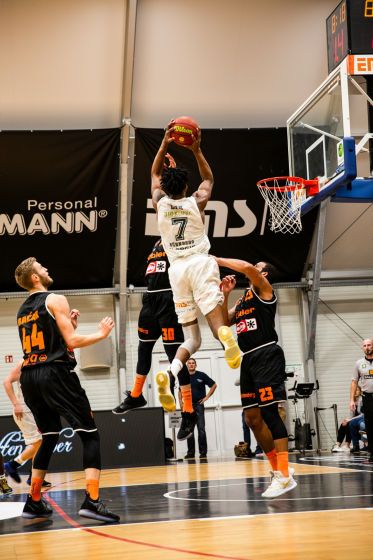
As the importance of perceptual-cognitive skills in sports is increasingly recognized, there has been an increase in marketing efforts promoting 'perceptual-cognitive training.' However, its usefulness has not been rigorously verified in sports settings, and it is unclear whether perceptual-cognitive training can be applied to actual matches. Terry says that a future challenge is to apply the findings gained in the laboratory to real-world training environments.
However, Terry pointed out that there is support for incorporating perceptual and cognitive skills into player scouting assessments: 'The trick to seeing the game differently is not just muscle size or reflexes, but a sharper mind.'
Related Posts:




in Science, Posted by log1h_ik