EU announces new rules banning the disposal of unsold clothes and shoes

On February 9, 2026,
New EU rules to stop destruction of unsold clothes and shoes - Environment
https://environment.ec.europa.eu/news/new-eu-rules-stop-destruction-unsold-clothes-and-shoes-2026-02-09_en
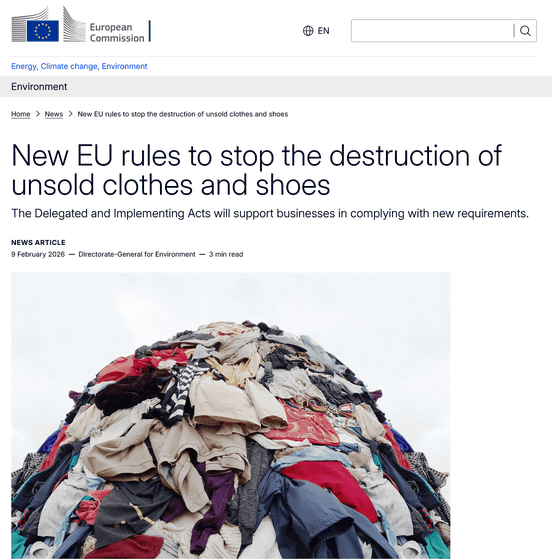
According to the EC, 4-9% of unsold textile products are discarded in Europe every year without being worn. This waste emits approximately 5.6 million tons of CO2, roughly equivalent to Sweden's total emissions in 2021. One of the reasons for this increase in waste is thought to be that some luxury brands have been incinerating unsold clothing instead of reselling it in order to protect their brand value.
Additionally, online clothing purchases and returns were also discussed in an EU policy briefing published in March 2024. The online clothing market is showing growth, with online sales of textiles and clothing accounting for 11% of all products in 2020, more than double the figure in 2009. The EU stipulates that 'consumers who purchase goods or services online have the right to cancel or return their order within 14 days without giving a valid reason,' and records show that one in five clothing items sold online is returned. This return rate is approximately three times higher than that of items sold in physical stores. It is estimated that 22-43% of clothing returned online ultimately ends up discarded, raising concerns that online shopping leads to clothing waste.
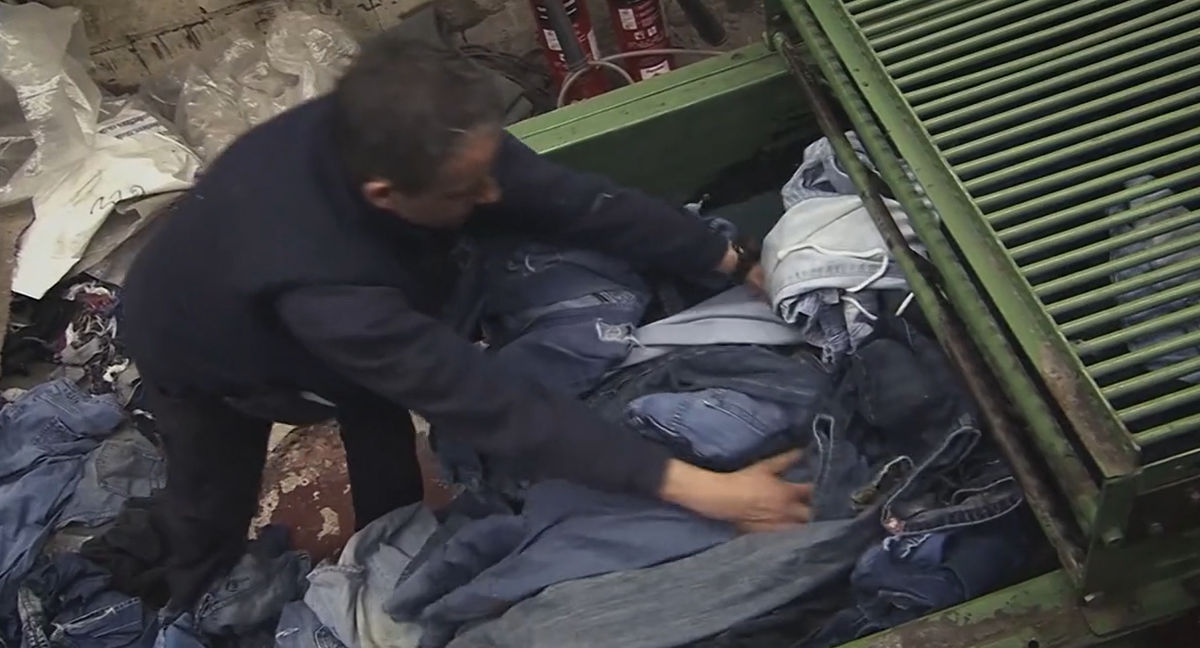
To reduce the environmental damage caused by wasteful disposal, the EU has introduced the
As part of the ESPR, the EU requires companies to disclose information about unsold consumer products that they discard as waste, and it also bans the disposal of unsold clothing, clothing accessories and footwear.
The Delegated and Implementing Acts adopted by the EC on February 9, 2026, clarified the prohibition on the unjustified destruction of unsold clothing, shoes, and accessories. They also require companies to disclose the status of unsold items. They also clarify how companies comply with the rules by providing exceptions for 'specific and justified circumstances in which disposal is permitted, such as for safety reasons or damage to the product,' and by introducing a standard format to facilitate information disclosure.
Jessica Rothwall, European Commission Commissioner for Environment, Water Resilience and a Competitive Circular Economy, said: 'The textile industry is leading the transition to sustainability, but challenges remain. The waste figures show the need for action. These new measures will empower the textile industry to move towards sustainable and circular production practices, making it more competitive and reducing its dependency.'

The introduction of the Digital Product Passport (DPP) is also being promoted as a technology to support this regulation, with full implementation planned for 2030. DPP uses QR codes attached to clothing to visualize the material composition, ease of repair, product identification, compliance, sustainability, and disposal status, with the aim of promoting product circularity and storing relevant information to strengthen compliance with regulations.
The ban and special measures for the destruction of unsold clothing, clothing accessories and footwear will apply to large companies from 19 July 2026 and to medium-sized companies in 2030. Disclosure rules under the ESPR already apply to large companies and will also apply to medium-sized companies in 2030, but are exempt from the rules for small companies.
Hacker News, a social news site, predicts that a law banning clothing disposal would mean that 'instead of disposing of unsold clothing in Europe, manufacturers would sell it to 'resellers', primarily in countries in Africa and Asia where there is little respect for the rule of law. These resellers would then report the garments as 'sold to consumers' and then dispose of them. So instead of disposing of the garments in Europe, it would add an unnecessary transport step and emit a lot of unnecessary CO2.'
Related Posts:







in Note, Posted by log1e_dh