An interview with director Tomohiko Ito about how he created Keigo Higashino's first animated film, 'The Keeper of the Camphor Tree'
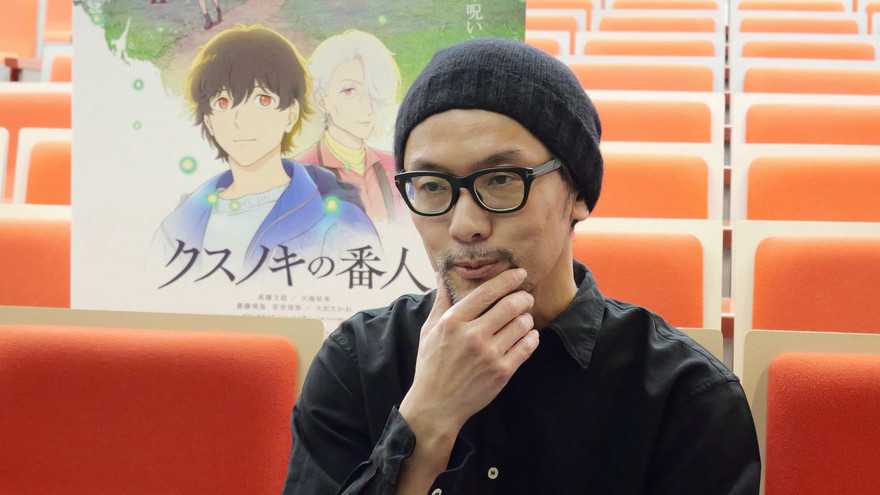
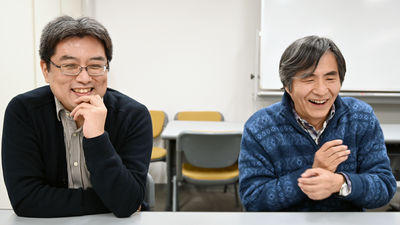
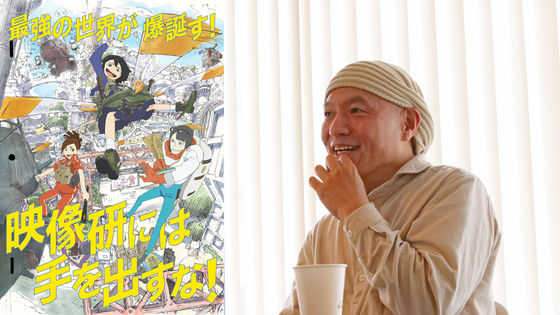
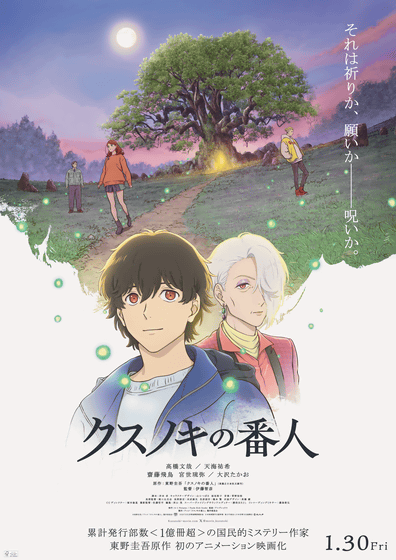
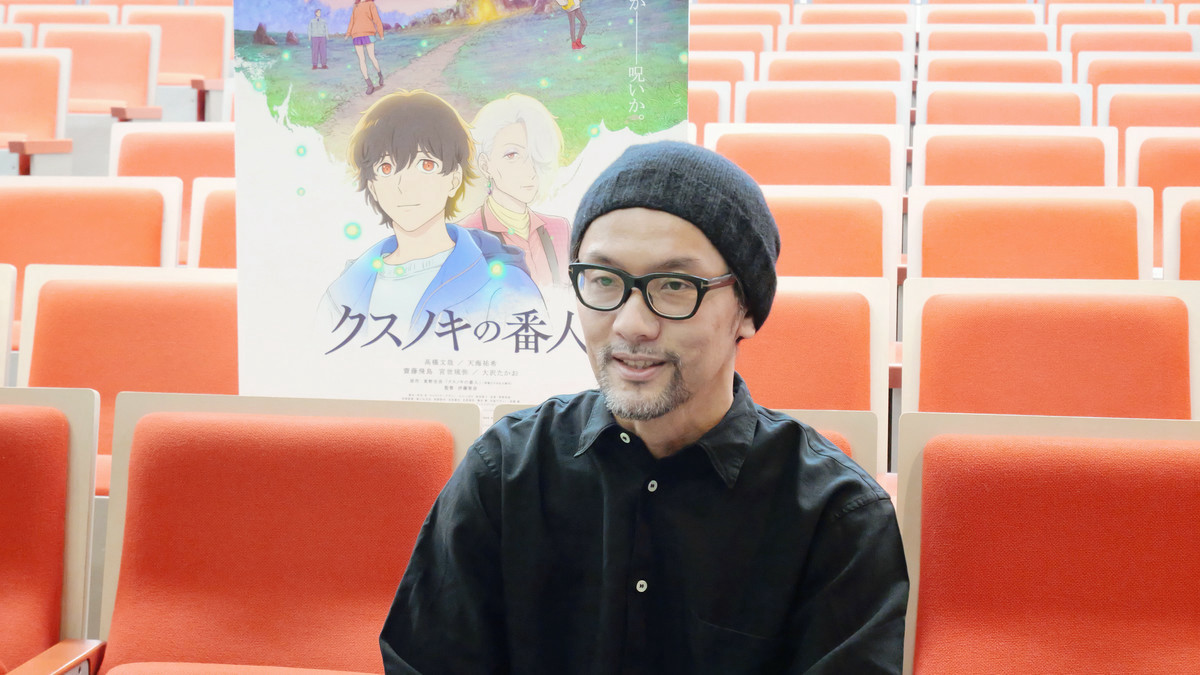
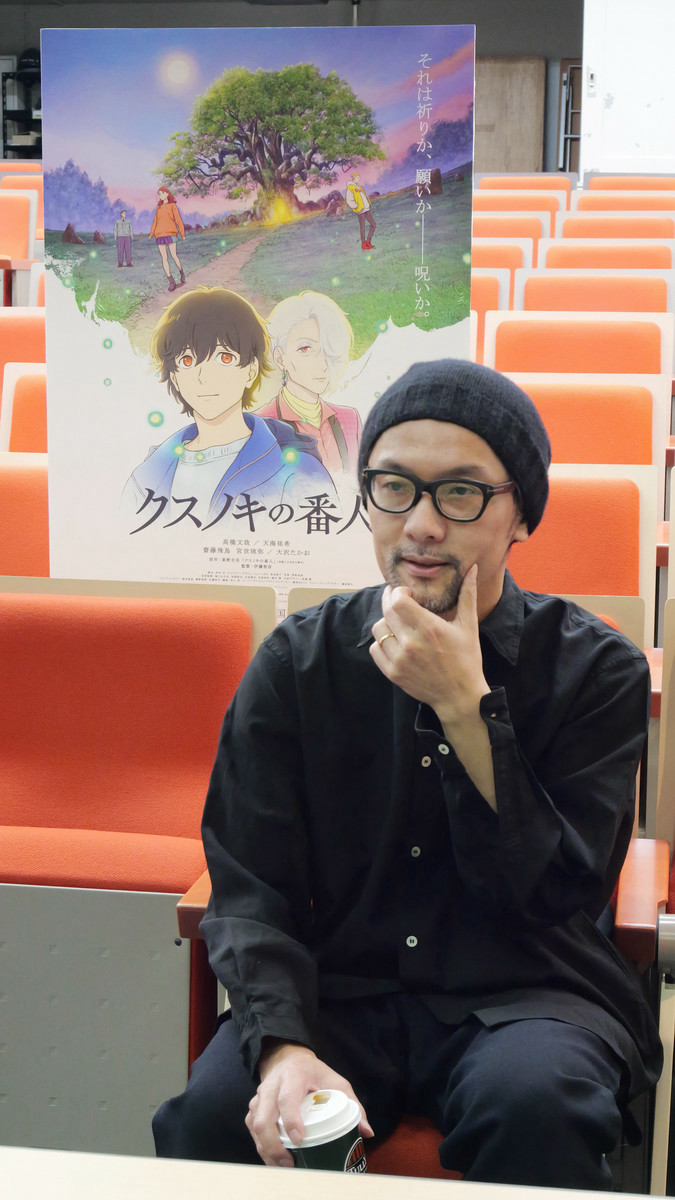
The first animated film based on novelist Higashino Keigo's work, ' The Keeper of the Camphor Tree ,' is set to be released on Friday, January 30, 2026. The film is directed by
The film 'Kusunoki no Kannin' will be released on Friday, January 30, 2026.
https://kusunoki-movie.com/
GIGAZINE: (hereinafter referred to as G)
I was surprised to learn that this is the first time a work by Higashino Keigo has been adapted into an animated film. Have you met Higashino several times?
Director Tomohiko Ito (hereinafter referred to as Ito):
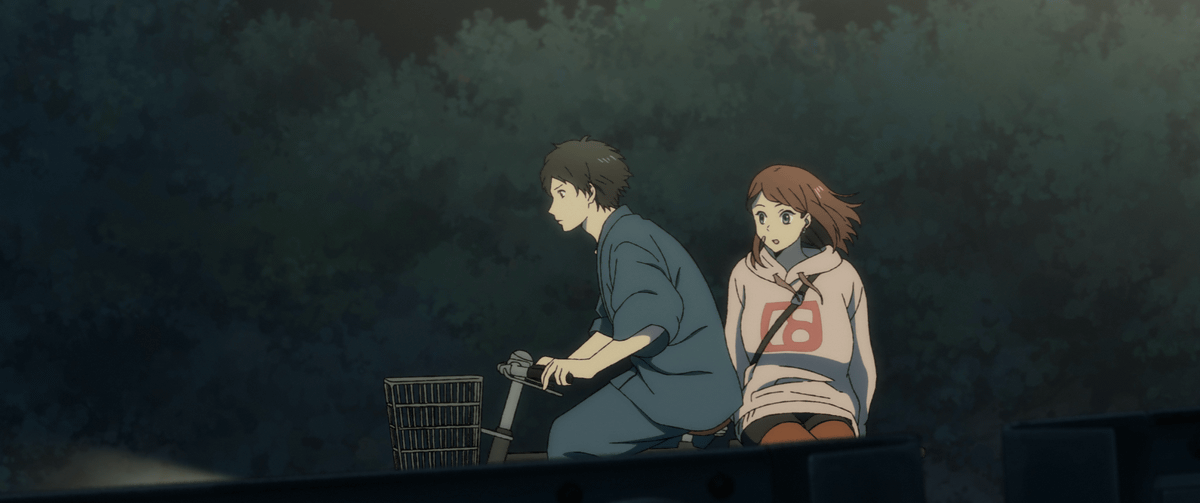
During production, I had the opportunity to say hello to him when he came to observe the dubbing, and he also came to the preview screening...I think we actually met about three times. I heard that the settings of Higashino's works are based on models, so I asked him what kind of place 'The Keeper of the Camphor Tree' was based on. He vaguely mentioned Akiruno City, Tokyo, so I actually rode around the area on my bicycle.
G:
The director himself scouted the locations.
Ito:
Yes. That's how I realized that there is a public bathhouse in the original work, but while Akiruno City has hot springs, there are no public bathhouses. I wondered, 'What was the image they had in mind?' and ran around the area. So I thought, 'Let's use this place and this place as inspiration for a shrine,' and started thinking about the setting for the story.

G:
You have been involved in this project since around 2019, but what was your first impression of the project?
Ito:
Initially, the idea was to make an anime version of Higashino Keigo's work. After that, when the publication of 'The Keeper of the Camphor Tree' was decided, I read the work and vaguely thought, 'This might be suitable for an anime,' and that's how it all started.
G:
When you decided to adapt it into an anime, did you have a film in mind from the beginning?
Ito:
I thought that if I was going to do it, it had to be through film.
G:
When you read the original work, do you get an idea of how long it will be?
Ito:
Well... for the time being, I was thinking that it absolutely had to be under two hours, and actually, in the script stage, I had the impression that it was a little shorter than it is now. However, I couldn't cut too much time, and the main character isn't a typical heroic character, but rather one who helps those around him, so somewhere along the line I resigned myself to the fact that it would be impossible to make it shorter than 110 minutes.
G:
As a director, did you have any desire to shorten the film to some extent?
Ito:
I think 100 minutes is about right for an anime movie. Of course, there are works that are longer than that, but for example, 'Evangelion: 3.0+1.0 Thrice Upon a Time' is only allowed to be made for Evangelion, right? Also, if it goes over two hours, I think the viewers won't be able to maintain their concentration. And then there's the practical side of it, but there's also the issue of money...
G:
I see. It certainly seems like two hours is a boundary for people involved in filmmaking. Were there any challenges in keeping this film within the two-hour limit?
Ito:
It seems that there are some films that were originally planned to be longer at the storyboard stage but end up being shortened, but in this case it was extended a little from around 105 minutes, so it wasn't a struggle to fit it in. There were some parts where I rearranged the film, using the excuse that I had left out a cut because I knew that 'this cut was difficult and might not come out,' but it wasn't something that 'I just couldn't cut it down.'
G:
Many real-life locations appear in this film, and even when I was watching the end credits I thought, 'There are so many different places!' Did you personally visit many of these places?
Ito:
Well, for example, there is a magnificent mansion called the Hanyu family in Hinode Town, next to Akiruno City, and I suddenly came across it while riding my bike, so I thought, 'I really want to use this,' and contacted the local government and interviewed them. From the exterior to the interior, it appears pretty much exactly as it is.
G:
I felt that the backgrounds in this work also had a very high sense of realism and were given a lot of attention. I imagine it must be difficult to create everything in this much detail...
Ito:
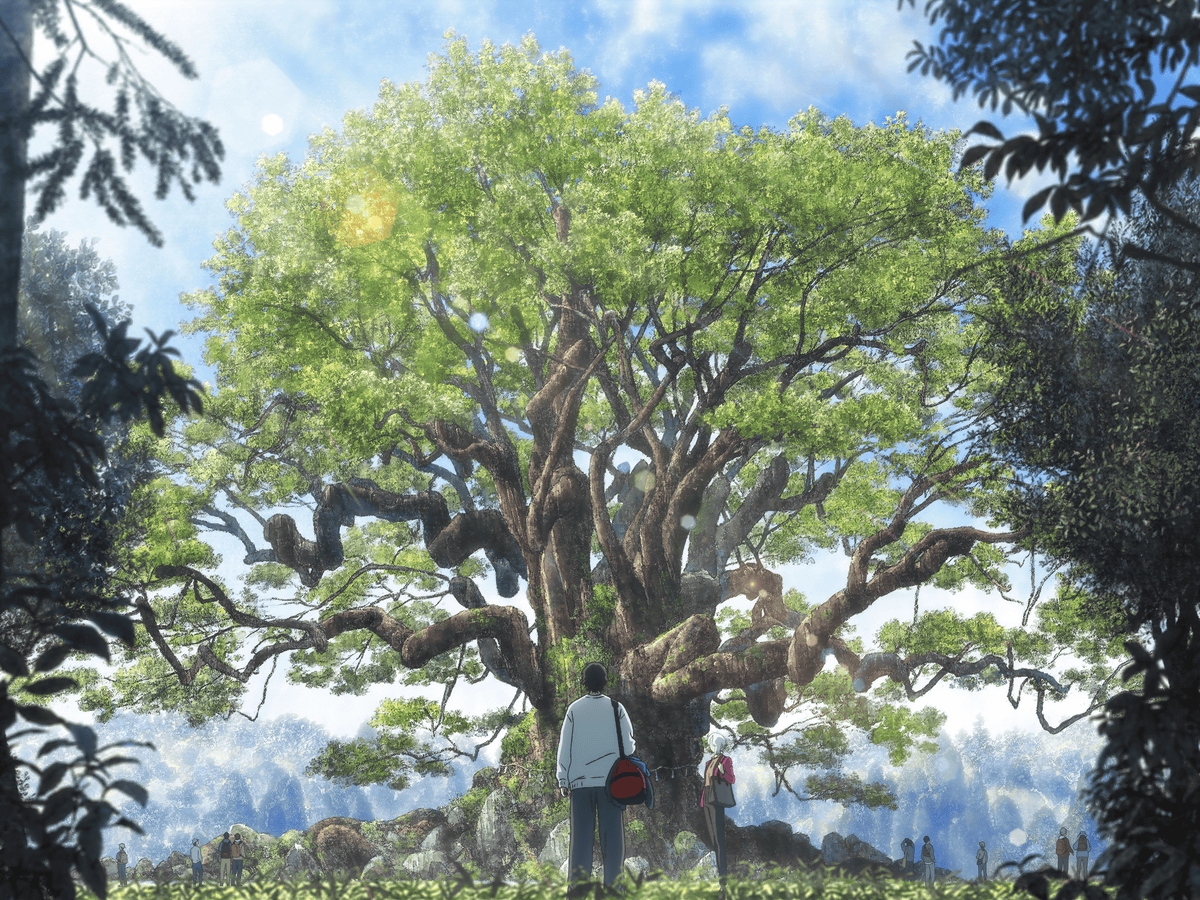
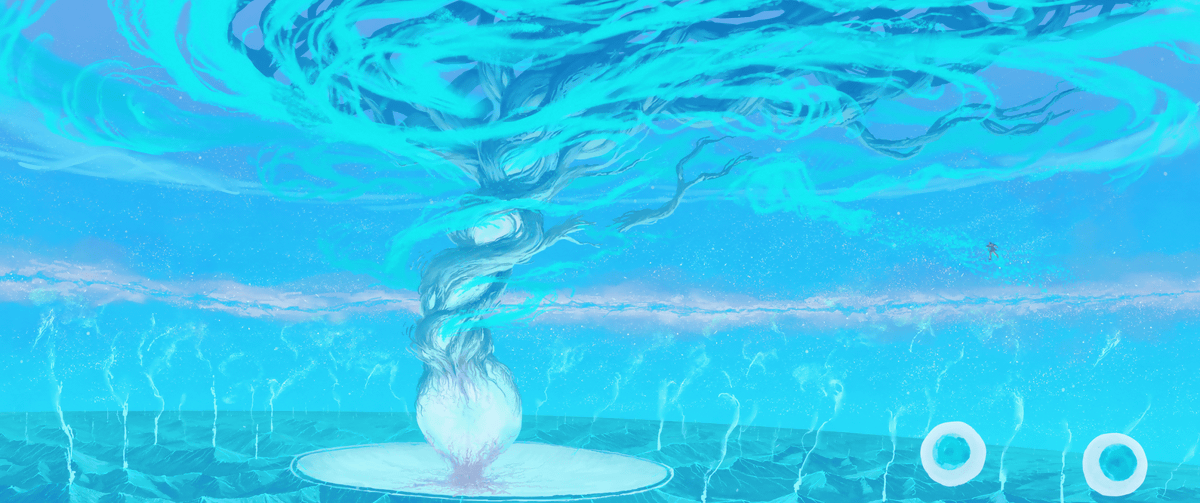
The panning up of the camphor tree that appears in the trailer was drawn by art director Hiroshi Takiguchi fairly early on in the art work. He started with something like an image sketch, but decided to go with this style this time, so he handed me a watercolor drawing and I thought, 'This... can I just accept it as is?' (laughs)
G:
(lol)
Ito:
A month later, they came up with something amazing, saying, 'I did it like this,' but I was shocked and wondered, 'Can they really mass-produce this?' 'One shot would be fine, but there are 1,000 more to go!?' That's when I decided to take action.
G:
In an interview published in Jump SQ., you said that from a director's perspective, 'I think it's easier to make an anime if there are gaps in the original work.' When reading a novel like this, were there any parts that made you think, 'These parts would be easy to adapt into an anime'?
Ito:
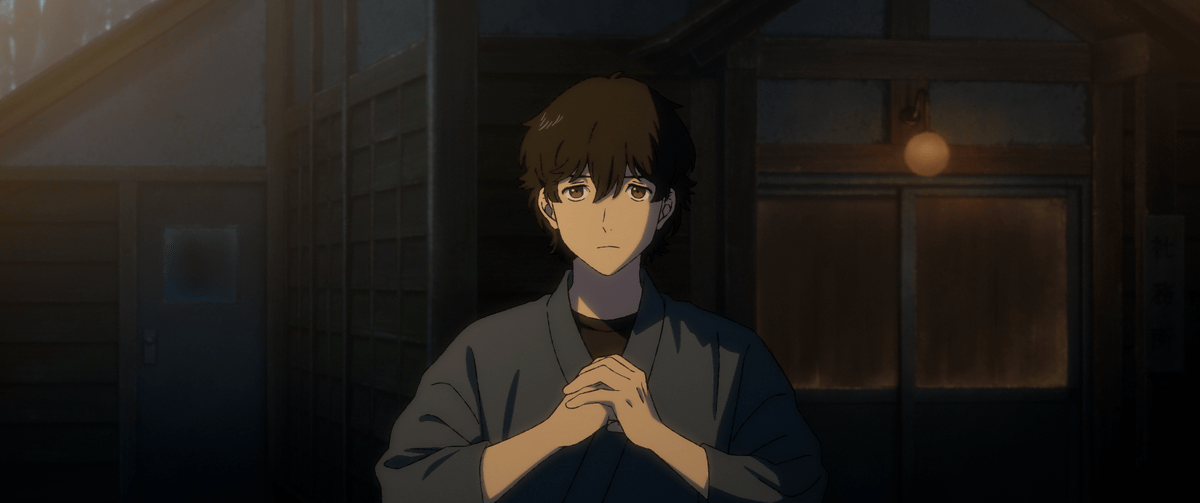
When I actually read it, I had some questions, such as when Reito thought the camphor tree prayer was a lie but didn't try it himself, and I thought, 'If he had had the chance, wouldn't he have tried it?' So I consulted with him about this and he said, 'It would make the movie flow more smoothly and add some fun if Reito actually tried it.'
G:
When you're reading a novel, do you have an image in mind of what the final image will look like?
Ito:
It was the result of reading it thoroughly. The part about Reito and his mother wasn't in the original work, and it was a show of the scriptwriter, Taku Kishimoto's hospitality. I didn't have that much human interest in it (laughs).
G:
(Laughs) In a similar past interview, you mentioned that when you were working on 'End of the Century Occult Academy,' you had trouble expressing what you thought was interesting, and that series composer Mizukami Seisuke gave you advice: 'Make it clear what three things you want to do, and don't put in more than three.' What were the parts of this work that made you think that if you could successfully visualize those parts, it would be a success?
Ito:
With this work, I wanted to achieve three things: 'A human drama with a fantasy feel,' 'Because it's a rather plain story, I wanted to create an artistic visual,' and 'Make Yanagisawa Chishu look cool.'
G:
When I looked at the work, I noticed some drastic changes in the style of the paintings, but was that part of your approach?
Ito:
Even under normal circumstances, thanks to Takiguchi's hard work, there are some slightly different parts around the camphor tree, but we thought it would be better to create an even more dramatic scene, so we asked individual artists to get involved. For the prayer scene, we used a bit of the old-fashioned Takahata Isao 'The Tale of Princess Kaguya' method, or 'The Yamadas' method... That's a method that requires three animations - one with only the solid lines removed, one without the solid lines for finishing, and one with colored tracing lines - and it's three times more time-consuming, but we thought, 'Let's try this too!' (laughs).
G:
Did you try it? (lol)
Ito:
This time, with the big name 'Higashino Keigo' behind it, I felt the art had to go all out, so I tried things I don't usually do.
G:
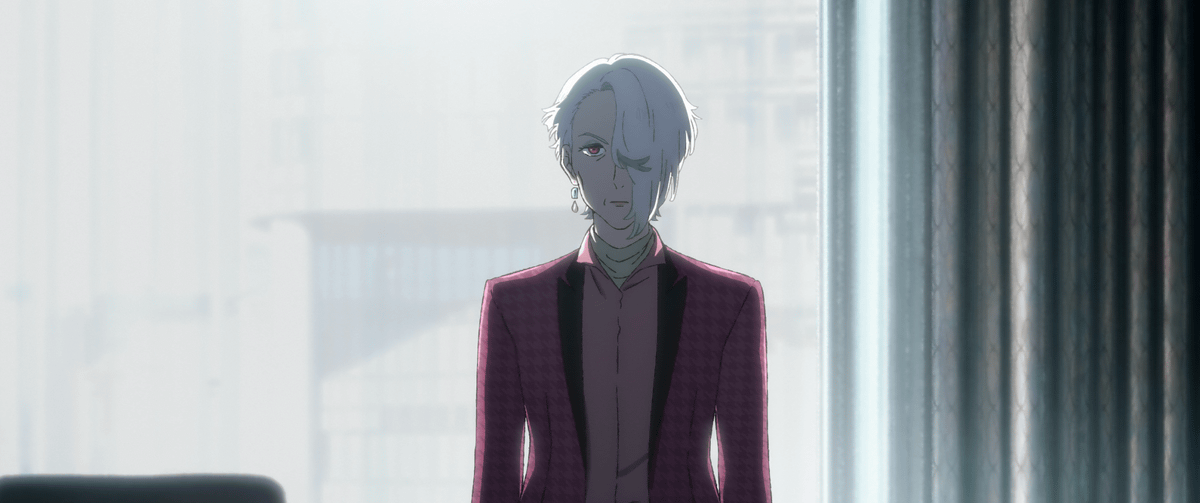
The director's earlier comment about 'making Yanagisawa Senshu cool' was something I really felt while watching the film. Senshu has a great presence in the film.
Ito:
That's one reason why Amami Yuki was cast. When it comes to 'memorable elderly female characters' in Japanese anime, I thought there hadn't been many since Grandma Sakae in 'Summer Wars.'
G:
He's certainly a very memorable character.
Ito:
I'd like to update it after 15 years.
G:
I heard that Amami-san acted facing Takahashi Fumiya, who played Reito, during the dubbing. Was that the intention behind the direction to make the dialogue better?
Ito:
To be honest, it was just a random idea (laughs).
G:
It was a random idea! (laughs)
Ito:
I wanted to try out a 'live feeling' that isn't often found when making anime. Director Mamoru Oshii says that in anime, the only place where that can happen is on the sound set. Of course, I felt that it would be better that way, but I'm always thinking about how to recreate something that's 'interesting.' This time, I had this idea during the dubbing, so I suggested, 'Hey, why don't we give it a try,' and surprisingly, all the staff were on board, saying, 'That sounds interesting.'
G:
I see, so that's what it was.
Ito:
When you're drawing something that's 'interesting,' the process itself inevitably takes time, but the good thing about being on the sound site is that if you come up with something 'interesting,' you can try it out instantly.
G:
When I watch a movie and the sound is disappointing, I always think, 'Why...?', but that wasn't the case with this film. Looking at your past works and interviews, I got the impression that you are very conscious of matching the sound with the screen. Is that true?
Ito:
I'm not sure if I can call him my sound mentor, but sound director Iwanami Yoshikazu said that one of his work methods was to 'Always put the dialogue in a way that everyone can hear.' He also said, 'Make sure it doesn't overlap with sound effects,' and 'Make sure it can be heard even when the music gets exciting.' I try to keep that in mind, but at the same time, when dubbing, I'm careful to strike a balance between letting the music do the work when you want the music to be heard, and letting the sound effects do the work when you want them to stand out. This film is a 7.1ch production, so I think that if you watch it in a theater, you'll be able to experience the sound being distributed to various speakers to the fullest and enjoy it.
G:
Do you set up a decent sound system at home to watch movies?
Ito:
No, not at all (laughs). When I watch at home, I try not to turn up the volume so I don't damage my ears.
G:
In terms of fantasy elements, this film has a beautiful blend of scenes that could easily be made into live-action and scenes that are completely fantasy, and I think the overall balance is as if it could actually happen. It feels like it's all connected together nicely and doesn't feel out of place, but was there anything that the director intended or was conscious of?
Ito:
Please assume that it was as I calculated (lol).
G:
(lol)
Ito:
I think that early on in the work, there are scenes where tiny old man and old woman-like characters with manga-like silhouettes are together with the main character, who has a normal head and body proportions, and although it should be a bit distorted in nature, the world presented is one in which this is allowed, so readers are able to accept that 'it seems real, but there are also some things that aren't real,' and I think it worked well in that it didn't feel strange even as the fantasy elements increased.
G:
Ah, I see. Maybe I had accepted it without even realizing it. On the other hand, in the story, Reito's circumstances are quite heavy, and Senshu also gives off the feeling of 'A person with a lot of pressure has appeared!', so there was a bit of pressure in the beginning, but was there an intention to make this part stronger?
Ito:
I've heard that many viewers these days don't like being put under stress, and there may be some parts in the beginning that feel a bit pressured, including Reito's circumstances, but I was conscious of pushing through those parts with a good tempo so that the viewer can rush through the first act without really feeling the pain. If the pain is prolonged too long, they might think, 'It might be hard to watch from here on out,' so I edited it so that before that happens, a cute girl appears and gets involved in the story, and 'So we'll be pursuing the mystery!'
G:
Director Ito has answered many interviews, and in one of them he said, 'I want to make a movie that feels like a movie.' Surprisingly, he didn't go into what exactly that means for a movie, so in what ways do you think about 'movie-ness'?
Ito:
I think my weakness is that I can't give a clear answer to that question. Director Mamoru Oshii wrote in a column
G:
Is that so?
Ito:
I don't know what Oshii-san will say when he sees it, but I always wonder if I can reach 'film' with some other approach. I feel a sense of envy, or even jealousy, that a work can be created from memorable cuts and scenes. I never quite get it right when I think, 'Can I go a little further here?' I think I've come the closest with this film, but I still feel like I'm out of reach of my ideal film image.
G:
I see…….
Ito:
To be honest, I still don't know what 'cinematic' is. It feels like an oasis in the desert, something that you get closer to and then further away from. I don't know if I'll have the opportunity to make another film, but I hope I can reach it someday. Perhaps it's something you can only reach at that moment, when you can say to yourself before you die, 'This was 'cinema,' this is the closest I've come to 'cinema.''
G:
In an interview, you said that you worked on this film thinking that it might be your last one, in the sense that it wasn't a continuation of a series. Is there a reason why you, Director Ito, who has worked on a variety of films, felt that way?
Ito:
Simply put, one-off films aren't a big hit these days. I think there's a consumer mindset that if they're going to pay 2,000 yen, they don't want to make a mistake. I also think there's a desire to 'see what everyone else is seeing,' and perhaps people don't want to go out of their way to see a film that makes them feel sad or upset. I think the reasons are complex, but it's extremely difficult to get a film into the list of choices for people who only see one or a few films a year. There might still be a chance if it's a continuation of a series or an extension of a TV series, but it seems like it would be difficult to get a chance to make a one-off. Director Mamoru Hosoda also told me, 'Don't think you can make a film every time.'
G:
Given that this film is based on a novel, did you feel a lot of pressure when making it?
Ito:
I didn't feel any pressure when I started making it, but once I finished production and it was time to release it, I started to feel pressure. I think, 'I took it on too casually' (laughs).
G:
You've previously mentioned that your work tools includean iPhone, an iMac, and Storyboard Pro, which you used as storyboard software . Did anything change during the production of this film?
Ito:
Basically, I can't do without my LCD tablet, iMac, and Storyboard Pro. I create a video editor, write my own lines, and add temporary sound effects and music, which is a similar style to Makoto Shinkai. I ask directors I know to look at my work and give me advice. Directors Tetsuro Araki, Naokatsu Tsuda, and Kotaro Tamura, who are all listed in the special thanks section of the film's end credits, are all people who gave me advice and feedback.
G:
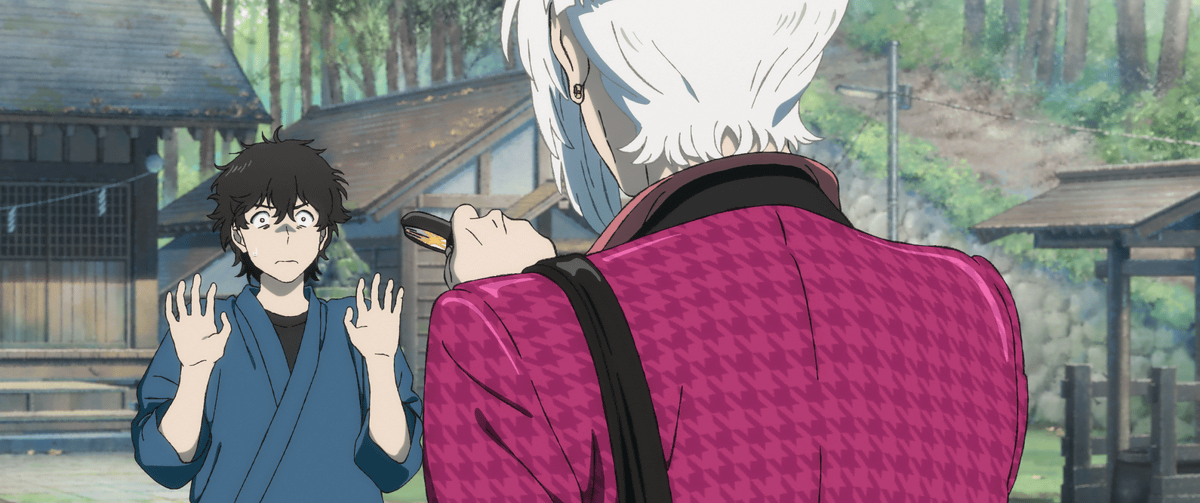
The main character of this work, Reito, has a slightly careless attitude, and there are times when you wonder, 'Why does he have that attitude?' As a director, was there anything you paid particular attention to when portraying Reito?
Ito:
To an older person, to borrow a line from Senshu, it seems 'foolish...'
G:
Exactly (lol)
Ito:
It's pretty short-sighted to get fired from a company and then try to steal money as revenge. But even so, I wanted to make him seem as lovable as possible, so that he doesn't come across as a nasty person. I wanted people to think, 'This guy is just a hopeless guy.'
G:
He was still in his early twenties. By the way, this is a bit off topic, but what was Director Ito like when he was around Reto's age?
Ito:
I wonder... I think I was a little more responsible than Reito, but that might be because I went to university. I also had a part-time job and my parents sent me money, so my circumstances were very different from Reito's.
G:
In an interview about this film, you said that you should have traveled abroad more, but do you not have many opportunities to do so now?
Ito:
I used to be taken on work trips. When it was time to go to anime events overseas, I would raise my hand and go to Europe, North America, and Asia, and while I used those as references, I would also go a little further on my own and buy books that were only sold locally to use as reference material. There was an episode where Oshii-san would go on location scouting trips and buy as many books as he could fit in his bag that were only available there, so I tried to imitate that as much as possible.
G:
I see. I was also advised to travel as much as possible when you're young...
Ito:
Anime often depicts 'unusual' situations, including other worlds. In everyday life, it's fine to recreate everyday experiences or incorporate those feelings, but when you're thrown into a different world or environment like that, how do you deal with the feeling of being completely alone? In everyday life, you might experience this if you go to school in a completely new place for the new semester, but you don't really get left alone in a place where you don't speak the language at all. Like the pain of having to board a plane with an upset stomach and having to somehow say 'please give me a seat near the toilet' in the English you can't speak (laughs).
G:
(lol)
Ito:
Nowadays I would use translation software, but back then I had to rack my brains trying to figure out how to convey it (laughs). If you experience that kind of desperation at some point, it makes it easier to convey your feelings from that experience when you have to express yourself. Even if it's not the same, you can empathize, thinking, 'This is how people would feel in a situation like this.'
G:
I see. Going off topic for a bit, when I read interviews with Director Ito, the name 'Evangelion' comes up often.
Ito:
(laughs) The first anime that made me pay attention to the creators was 'Evangelion,' so I always say that it was the trigger, so I always mention him by name, but I don't take the initiative to mention him by name (laughs).
G:
Sorry (lol)
Ito:
At the time, after the anime finished airing, Director Anno Hideaki appeared in various magazines like 'QUICK JAPAN,' and I realized in later years that he was posing like that, but at the time I thought, 'Wow, what an incredible... what an incredible person. Anime can only be made by someone like this. I could never do it.' It was the first work where I got to see the face of the creator, so it left a strong impression on me.
G:
Do you have many acquaintances in the anime industry?
Ito:
I don't know... I don't have much contact with Miyazaki-san or Oshii-san, but if it's someone of the same generation, I would like to meet them as much as possible. If I were to make a TV series, I could ask them to help me with the storyboards (laughs).
G:
That's an advantage (laughs).
Ito:
I also want to see young, talented directors work up close. Director Rie Matsumoto is very talented, so when I casually accepted the job, she completely revised the storyboard (laughs).
G:
What! (lol)
Ito:
It's really fun to watch someone who takes a different approach than I can do myself, and if there's any technique I can steal, I'd like to do it.
G:
It's almost time, so finally, Director Ito, is there any part of 'The Guardian of the Camphor Tree' that you would recommend to people who want to see your work?
Ito:
Of course, Hiroshi Takiguchi's art is great, but the character portrayals and acting, thanks to the hard work of animation director Akiko Itagaki, are also key points. There's also the music by Yugo Kanno and the theme song by Uru. The artistic individuality of individual artists is also incorporated here and there, so I think you'll enjoy it even more if you watch all the way through to the end credits, check out who was involved, and then search for the work later on YouTube. I'm confident that this is a film that will make you cry in a comfortable way, so I hope you'll see it in the theater.
G:
Thank you very much for your detailed explanation.
Ito:
thank you very much.
The film 'The Guardian of the Camphor Tree' is currently being screened to great acclaim from Friday, January 30, 2026.
Animated film 'Kusunoki no Kannin' official trailer ② [Released on Friday, January 30, 2026] - YouTube
©東野圭吾/アニメ「クスノキの番人」製作委員会
Related Posts: