Ukraine has become a live-fire testing ground for AI drones developed by a venture led by former Google CEO Eric Schmidt, raising concerns among Russian government officials.
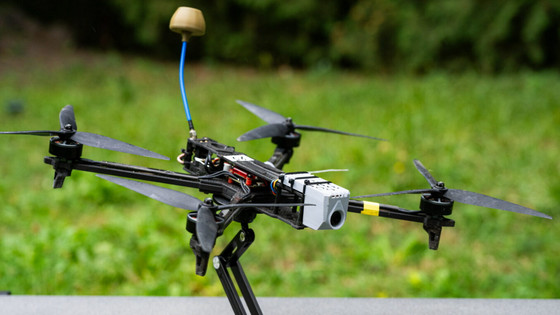
The New York Times reported that Ukraine is serving as a live-fire test site for autonomous AI drones developed by a venture led by former Google CEO Eric Schmidt. A Russian technical intelligence report acknowledged that the recovered drones use world-class microelectronics and that no effective countermeasures exist.
In Ukraine, an Arsenal of Killer AI Drones Is Being Born in War Against Russia - The New York Times
According to the New York Times, Schmidt is running secret ventures under the names White Stork, Project Eagle, and Swift Beat, supplying Ukraine with advanced weaponry. Schmidt, who previously served as chairman of the Defense Innovation Board and the National Security Commission on AI, now likens himself to a 'licensed arms dealer,' the New York Times reported.
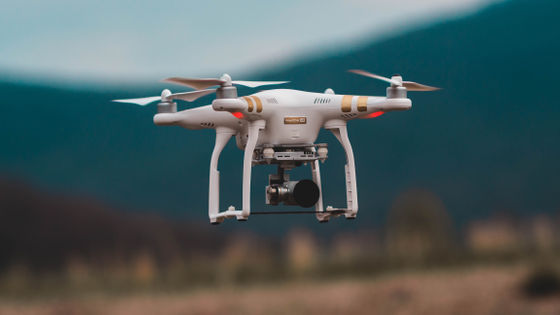
Schmidt's flagship drone, Bumblebee, has the ability to autonomously track down and complete attacks on targets without any human intervention once a target is identified. Bumblebee is equipped with an autonomous target recognition function using AI, automatically detecting soldiers, vehicles, bunkers, and other targets from camera footage and presenting them to the pilot. It also incorporates various technologies to counter the Russian military's aggressive jamming, resulting in an autonomous attack hit rate of over 70% even when communications are blocked. Control is also possible via the internet, and there have been reported cases where pilots have conducted attacks from approximately 300 miles (approximately 483 kilometers) away after ground teams deployed the drone on the front lines.
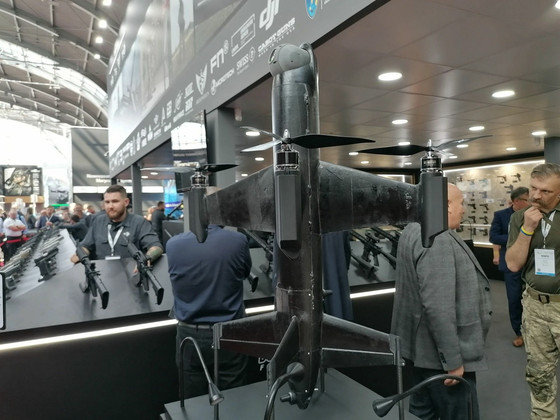
Schmidt's efforts don't stop there. He also offers the Hornet, a fixed-wing drone capable of flying at 100 km/h and attacking over a range of 90 miles (about 144 km), and the Merops, a system that can intercept incoming suicide drones with a 95% probability. These developments are being carried out in close cooperation with the 13th Haltia Brigade, an elite unit of the Ukrainian military, and software is frequently updated remotely based on feedback from the battlefield, achieving an extremely rapid development cycle.

A Russian technical intelligence report analyzed the recovered aircraft and determined that its chipsets and motherboards were of the highest quality, comparable to those of the world's leading manufacturers. Russian soldiers around Kupyansk and Kharkiv report that these new drones fly smoothly, completely immune to jamming, and score hits one after another. The Russians have acknowledged that the only sure way to stop them is to physically shoot them down.
Ukraine's accelerated adoption of these advanced technologies stems from compelling defense reasons. As reported by UPI , Russian attacks on civilian infrastructure have intensified, resulting in devastating damage in Odessa, including injuries to three children, including a seven-month-old baby, and three adults, and leaving more than 170,000 people without power. In these circumstances, securing more accurate defenses is crucial to survival.
Another reason cited by the right-wing American media outlet Fox News is that Russia is waging an information war, claiming that there was an attack on President Putin's residence and using that as a pretext to justify further military action.
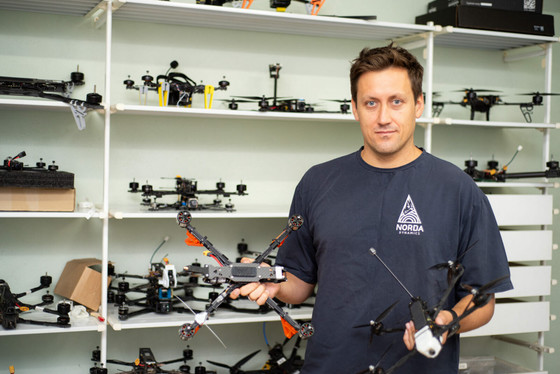
According to the New York Times, there are other examples of private defense companies providing generous support to Ukraine, such as Vermeer raising $12 million (approximately 1.84 billion yen) to develop a GPS-free visual positioning system, and NORDA Dynamics supplying 50,000 autonomous attack modules. Private support from companies like these is a pillar of Ukraine's defense system.
Russia is not just sitting idly by, either: it is also reportedly developing its own AI-enhanced weapons. Examination of Russian military drones recovered from the battlefield reveals that Russia is also investing heavily in AI-based target recognition and autonomous flight technologies, spurring a fierce AI arms race with Ukraine.
Related Posts:




in Hardware, Posted by log1i_yk