Tanning salons are far more harmful than sunlight, increasing skin cancer risk 2.85 times higher, researchers call for age restrictions
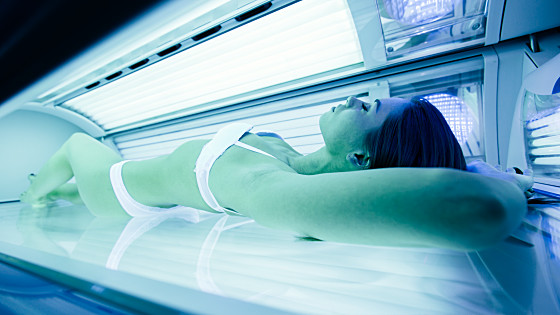
Some tanning salons claim that tanning lamps are safer than sunlight. However, a joint study by Northwestern University and the University of California, San Francisco, revealed that using tanning beds increases the risk of skin cancer by 2.85 times. DNA analysis also found that tanning beds cause more extensive DNA damage than sunlight.
Molecular effects of indoor tanning | Science Advances
Tanning beds triple melanoma risk, potentially causing broad DNA damage - Northwestern Now
https://news.northwestern.edu/stories/2025/12/tanning-beds-triple-melanoma-risk-potentially-causing-broad-dna-damage
Indoor Tanning Makes Youthful Skin Much Older on a Genetic Level | UC San Francisco
https://www.ucsf.edu/news/2025/12/431206/indoor-tanning-makes-youthful-skin-much-older-genetic-level
Professor Pedram Jerami, lead author of the study, has been a skin cancer researcher and has been involved in the treatment of melanoma , a type of skin cancer, for over 20 years. Through his many years of experience, he noticed that melanoma was more likely to be diagnosed in women under the age of 50, which led him to suspect that tanning bed use might be related to the development of melanoma.
The research team, led by Jerami, compared the medical records of 3,000 patients who had used tanning beds with 3,000 who had not. They found that 5.1% of tanning bed users were diagnosed with melanoma, compared with 2.1% of non-users. After controlling for factors such as age, sex, sunburn history, and family history, they found that tanning bed use increased the risk of developing melanoma by 2.85 times.
The figure below shows tanning bed users on the left and non-tanning bed users on the right, with the density of the color indicating the risk of melanoma in each area. Tanning bed users were found to have a higher risk of developing melanoma in areas not exposed to the sun, such as the lower back and buttocks.
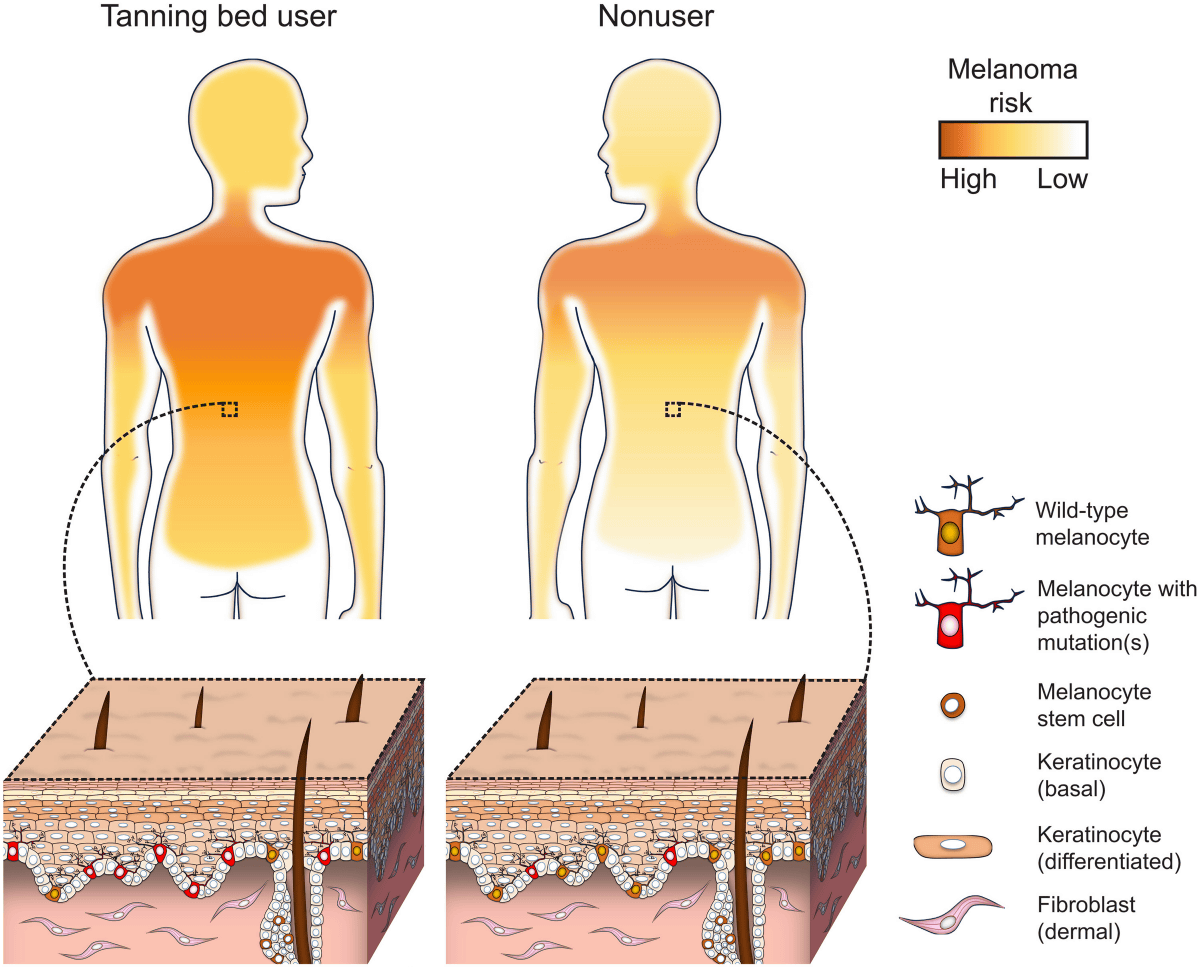
In addition, DNA sequencing of melanocytes (cells that produce melanin and become melanoma when malignant) from 11 patients with tanning bed experience, 9 patients without tanning bed experience, and 6 cadaveric donors was performed. The results showed that tanning bed users had approximately twice as many genetic mutations as the control group, and that mutations occurred even in places that are not normally exposed to sunlight. A higher number of DNA mutations indicates a higher likelihood of mutations related to the development of melanoma.
Professor Jerami points out that many melanoma patients start using tanning beds at a young age when they have little education, and he calls for the use of tanning beds by minors to be made illegal. He also argues that similar warnings about the risk of lung cancer should be required for tanning beds, just as they are printed in large letters on cigarette packs.
Related Posts:




in Science, Posted by log1o_hf